Why Your Tire Pressure Light Turns On When It Gets Cold
Cold weather lowers tire pressure, even if you haven’t hit a pothole or picked up a slow leak. Tire pressure drops by roughly 1 PSI for every 6°C the temperature falls, which means a tire which was properly inflated in September can be noticeably underinflated by the time a real cold snap hits. A quick pressure check each time the temperature drops is one of the easiest maintenance habits for safer winter driving.
Why Does Cold Weather Lower Tire Pressure?
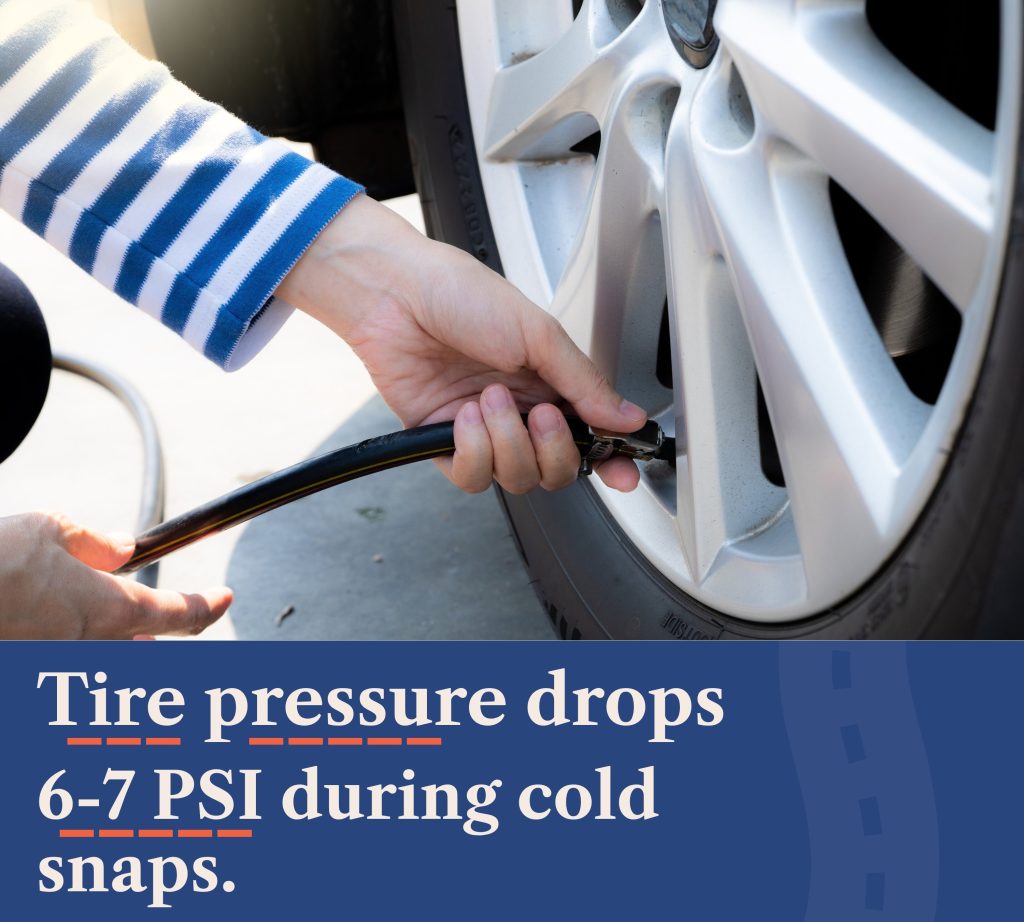
It comes down to basic physics: the air inside your tires contracts as it cools. As temperatures drop, that air takes up less space and tire pressure falls along with it, this means nothing is actually leaking out. On average, tire pressure decreases by about 1 PSI for every 6°C drop in temperature. That might not sound like much, but Alberta’s temperature swings add up fast: go from 20°C in September to -20°C in December and you could be looking at a drop of 6-7 PSI, enough to shift a properly inflated tire into dangerously low territory.
Why Does Low Tire Pressure Matter?
Underinflated tires affect more than fuel economy. They reduce your contact with the road, increase stopping distances, wear unevenly and are more prone to damage on rough or icy roads. On winter roads that are already less forgiving, proper tire pressure is one of the simplest things a driver can control to keep handling and braking as predictably as possible.
How Often Should I Check My Tire Pressure in Cold Weather?
Check monthly through the colder months and any time there’s a sharp temperature swing, the kind of sudden cold snap Alberta sees more than once each winter. Checking first thing in the morning, before driving, gives the most accurate “cold” reading, since driving warms the tires and temporarily raises the pressure.
Where Do I Find the Right Tire Pressure for My Vehicle?
Use the sticker on your driver’s door jamb, not the number printed on the tire itself. The number on the tire sidewall is the tire’s maximum pressure rating, not the recommended pressure for your specific vehicle. These two numbers are often different and using the wrong one can leave your tires over or under inflated.
Quick Tire-Pressure Reminder
- Check pressure monthly through fall and winter and after any big temperature drop
- Check pressure cold, before driving, for the most accurate reading
- Use the pressure listed on your driver’s door jamb sticker, not the tire sidewall
- Don’t rely on a visual check alone, tires can look fine while still being significantly underinflated
- If your tire pressure warning light comes on, check pressure as soon as it’s safe to do so, rather than waiting
Frequently Asked Questions
Why does my tire pressure light come on in cold weather? Cold air causes the air inside your tires to contract, lowering the pressure even without a leak. This often triggers a low tire pressure warning as temperatures drop.
How much does tire pressure drop per degree of temperature change? Roughly 1 PSI for every 6°C decrease in temperature.
Where should I check the recommended tire pressure for my vehicle? On the sticker inside your driver’s door jamb and not the number printed on the tire’s sidewall, which shows the tire’s maximum rating, not the recommended pressure.
How often should I check my tire pressure in winter? At least once a month through the colder season and any time there’s a significant temperature swing.
Does low tire pressure affect how my car handles in winter? Yes. Underinflated tires reduce road contact, increase stopping distances and wear unevenly, all of which matter more on cold or icy roads.