Our office is closed on Wednesday, September 30 for Truth and Reconciliation Day. Regular hours resume on Thursday, October 1.

What Is Car-Free Day and Why Albertans Might Want to Try It
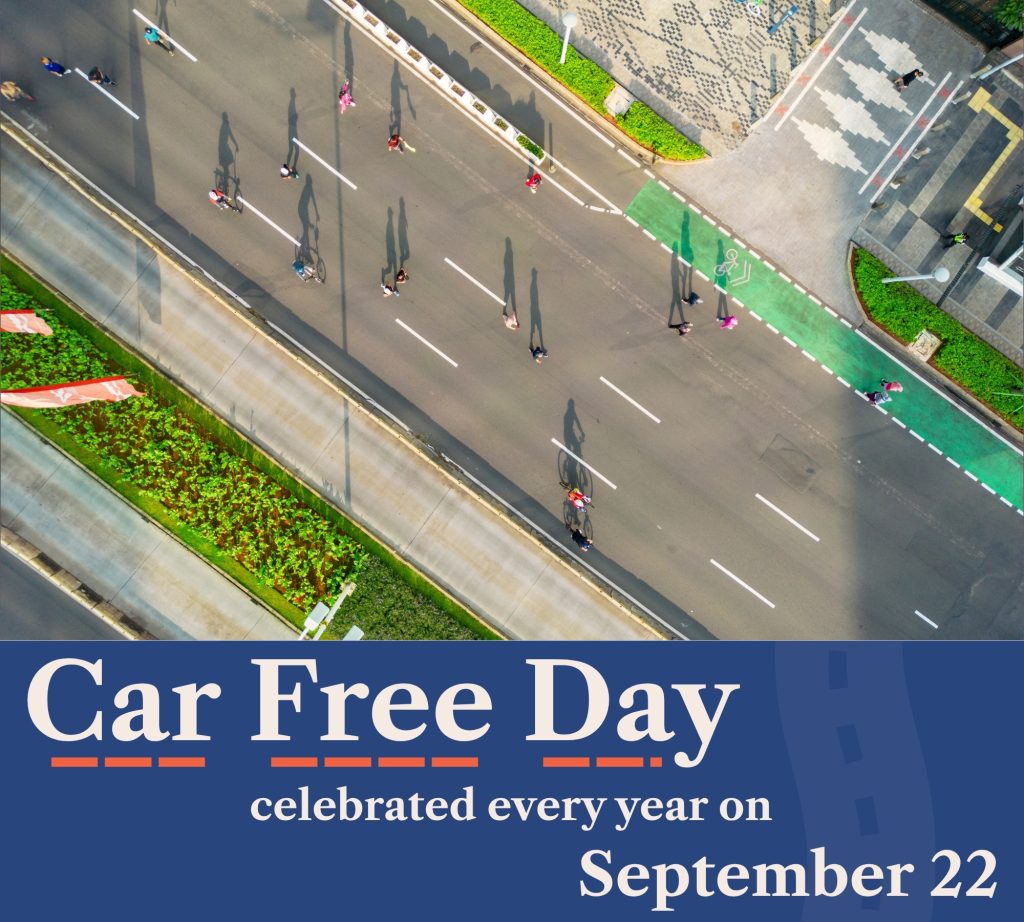
World Car-Free Day falls on September 22 every year, encouraging people to walk, bike, carpool, or take transit instead of driving; even if it is just for one day. The observance dates to car-free Sundays in the Netherlands and Belgium in the 1950s and grew into a coordinated global event in 2000, now marked in 46 countries and roughly 2,000 cities. For Alberta drivers, it’s less about giving up the car forever and more about a low-stakes nudge to notice how the other options like walking, cycling, transit, carpooling, might fit into an ordinary week.
What Is Car-Free Day?
Car-Free Day is an annual, worldwide invitation to leave the car parked for a day and get around another way. It may be on foot, by bike, by bus or train or by sharing a ride. The idea isn’t to say, “driving is bad”; it’s the thing most of us default to out of habit, even for trips where another option would work just as well.
Where Did Car-Free Day Come From?
The concept has surprisingly old roots. Car-free Sundays were first tried in the Netherlands and Belgium in the mid-1950s, partly as a response to concerns about cars taking over urban life. The idea resurfaced in the late 1990s, when the British Environmental Transport Association coordinated a handful of car-free days in 1997 and Spain, Italy and France picked up similar initiatives soon after. The movement crossed into South America by 2000, with Bogotá launching a major program and European Car-Free Day was formally established on September 22, 2000. Today, the observance spans 46 countries and about 2,000 cities worldwide.
How Do People Usually Mark the Day?
Around the world, Car-Free Day shows up as walking or biking commutes, transit ridership pushes, street festivals and picnics on roads normally reserved for traffic and the occasional race featuring alternative-energy vehicles. The common thread is simple: cities temporarily reclaim some road space for people instead of vehicles, if only for a day.
Why Might a Car-Free Day Be Worth Trying in Alberta?
Alberta is a driving-heavy province by necessity in a lot of places, but for shorter trips within Edmonton, Calgary or other Alberta cities, a car-free day (or even just a car-light one) has a few genuine upsides worth considering:
- Less wear and tear on your vehicle. Every kilometre you don’t drive is a kilometre you don’t have to maintain, fuel or eventually repair.
- A bit of built-in exercise. Walking or cycling even part of a regular commute adds physical activity which is easy to skip otherwise.
- A change of pace. Transit, walking and cycling all offer a different, often slower view of your own city than driving does.
- Lower short-term costs. Parking, fuel and general vehicle wear all take a day off when your car does.
Does Skipping a Day of Driving Affect My Insurance?
A single car-free day won’t change your policy. But it’s a useful reminder that how much you drive is one of the factors influencing your auto insurance rate over time. If your driving habits have changed with a short commute, transit use or working from home, it’s worth checking with your agent/broker to see whether your coverage still reflects how you actually use your vehicle.
Summary
You don’t need to swear off driving to get something out of Car-Free Day. Even trying it for a single errand, a short commute or a Saturday outing is a low-effort way to notice what other options exist in your own city and maybe find one worth keeping around.
Frequently Asked Questions
When is Car-Free Day? September 22 every year, also known as World Car-Free Day.
Where did Car-Free Day originate? It traces back to car-free Sundays in the Netherlands and Belgium in the 1950s, with the modern global observance formally established on September 22, 2000.
How many countries participate in Car-Free Day? Roughly 46 countries and about 2,000 cities worldwide take part in some form of Car-Free Day activity.
What are common ways to participate in Car-Free Day? Walking, cycling, using public transit or carpooling instead of driving alone, along with community events like street festivals held on normally car-filled roads.
Does not driving for a day affect my car insurance? Not from a single day, but an actual long-term change in how much you drive can be worth discussing with your insurance agent/broker, since usage is one factor which can affect your rate.