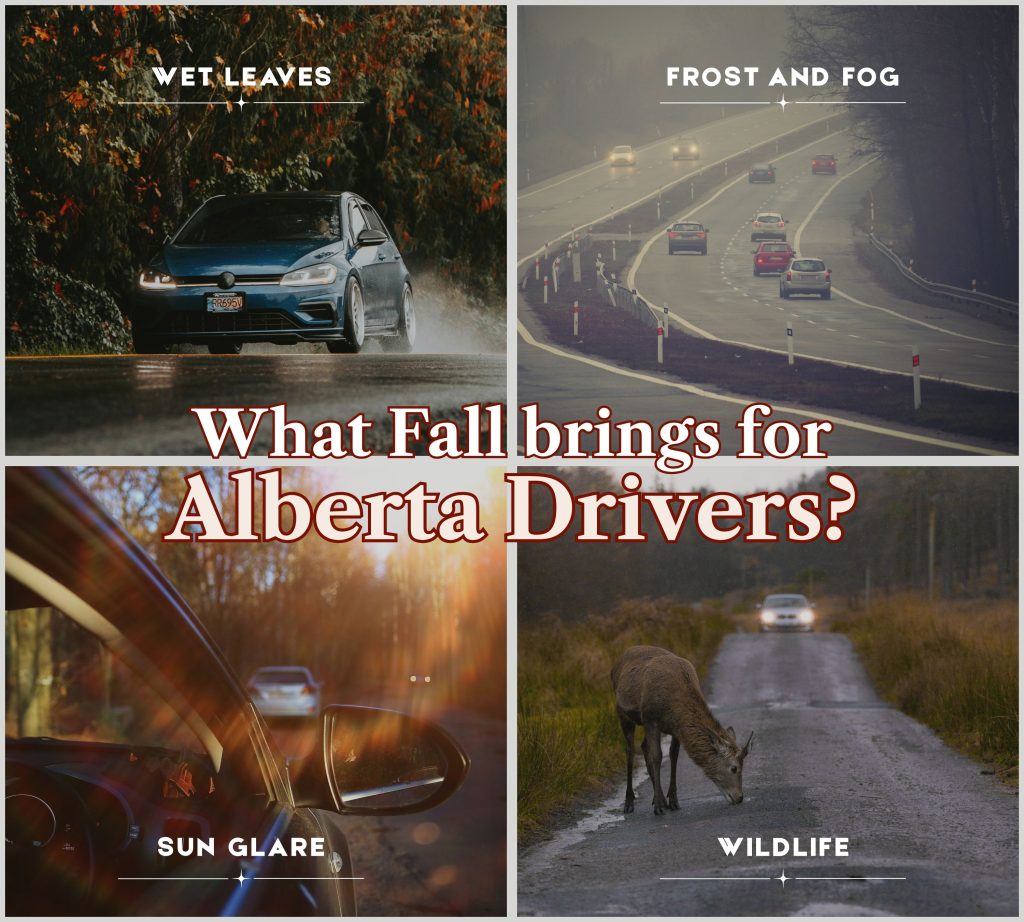
The hazards drivers face during Fall
Fall driving in Alberta brings a mix of hazards which are easy to underestimate: black ice on bridges and shaded roads, wet leaves behaving like ice, dense morning fog, blinding low-angle sun during rush hour and a sharp seasonal spike in wildlife collisions like deer and moose are most active on Alberta roads through October and November. None of these are as obvious as a snowstorm, which is exactly why they catch so many drivers off guard.
Why Fall Driving Deserves More Caution Than It Gets
Summer habits don’t transfer well into fall. Drivers often carry over the same following distances and speeds from the dry summers, right into a season where conditions can shift dramatically between the morning commute and the drive home. The risk isn’t usually one big storm, instead it’s a string of smaller, easy-to-miss hazards which add up.
Black Ice: The One You Can’t See Coming
Black ice forms when a thin layer of moisture freezes on the road and it’s nearly invisible because it blends in with the asphalt underneath. It shows up earliest and lingers longest on bridges and overpasses, since cold air reaches them from both above and below, letting them freeze before the rest of the road does. Shaded stretches of road under the trees or between buildings are also common cold spots long after open roads have warmed up. If a morning feels borderline cold, treat bridges and shaded corners as if they’re icy, even if the rest of the drive looks clear.
Wet Leaves: Basically Ice in Disguise
It sounds like a minor nuisance, but wet leaves can be genuinely dangerous. A layer of wet leaves on pavement can be as slippery as ice and it also hides what’s underneath like potholes, faded lane markings or debris. Braking distances lengthen significantly on a leaf-covered road, so the extra following distance (might feel unnecessary, but) is exactly the buffer you’ll want if you need to stop suddenly.
Fog and Frost: The Morning Visibility Problem
Cold autumn mornings often bring fog, especially in low-lying areas and river valleys. Switch to low-beam headlights in fog as high beams bounce light back at you and make visibility worse, not better. Frost is the other early-morning hazard: it can obscure your windshield well after you think you’ve cleared it, so give your defroster a real head start before pulling out of the driveway rather than scraping a peephole and hoping for the best.
Sun Glare: An Underrated Rush-Hour Hazard
As the season shifts, the sun sits lower in the sky and lines up more directly with morning and afternoon commute times. This low-angle glare can briefly blind drivers to traffic lights, crosswalks and vehicles ahead. Keep sunglasses in the car, use your sun visor proactively and give yourself extra following distance during the specific hours when glare tends to hit hardest on your regular route.
Wildlife on the Move: Alberta’s Biggest Overlooked Fall Risk
This is the hazard most drivers underestimate the most. Alberta sees more than 1,000 wildlife-related collisions every month on rural roads and activity climbs sharply in the fall as animals move more for mating season and food. According to the Alberta Motor Association, November is the peak month for wildlife-vehicle collisions in the province and about 80% of those collisions involve deer.
These collisions aren’t just inconvenient, they’re costly! According to the Government of Alberta, animal-vehicle collisions cost Albertans approximately $300,000 a day in direct and indirect costs, including property damage, health care, and highway cleanup. Moose collisions are less frequent than deer collisions but far more dangerous given their size.
A few practical habits help: slow down in posted wildlife zones, scan the roadside (not just the road) especially at dawn and dusk and if a collision looks unavoidable, brake firmly and stay in your lane rather than swerving. Swerving is a leading cause of secondary collisions with other vehicles or fixed objects.
Temperature Swings: The Hazard Under Your Tires
Fall’s wide temperature swings quietly affect your vehicle too. Tire pressure drops as temperatures fall and a tire which was properly inflated on a warm September afternoon can be noticeably underinflated by a cold October morning. It’s a small thing, easy to forget until it affects your handling on a road which is already asking more of your tires than summer ever did.
The Bottom Line
None of these hazards are as dramatic as a blizzard and this exactly is the problem. Fall conditions rarely announce themselves. A little extra following distance, a check of your tires and defroster and genuine attentiveness for wildlife on rural stretches cover most of what fall driving in Alberta throws at you.
Frequently Asked Questions
Why is black ice more common on bridges in the fall? Bridges and overpasses lose heat from both above and below, so they cool and freeze faster than the surrounding roadway, often before drivers expect ice to be a factor.
Are wet leaves actually dangerous while driving? Yes. A layer of wet leaves can be as slippery as ice and can also hide road hazards like potholes or faded lane markings underneath.
When is wildlife-vehicle collision risk highest in Alberta? November is the peak month, according to the Alberta Motor Association, with deer involved in about 80% of wildlife-vehicle collisions provincewide.
What should I do if a deer or moose is on the road ahead? Brake firmly and stay in your lane rather than swerving. Swerving to avoid an animal is a common cause of secondary collisions with other vehicles or roadside objects.
Why does my tire pressure warning light come on more in the fall? Cooler temperatures cause the air in your tires to contract, lowering pressure even without a leak. It’s worth checking regularly as fall temperatures drop.
Should I use high beams in fog? No. High beams reflect off fog and reduce visibility. Low beams aimed toward the road provide better visibility in foggy conditions.