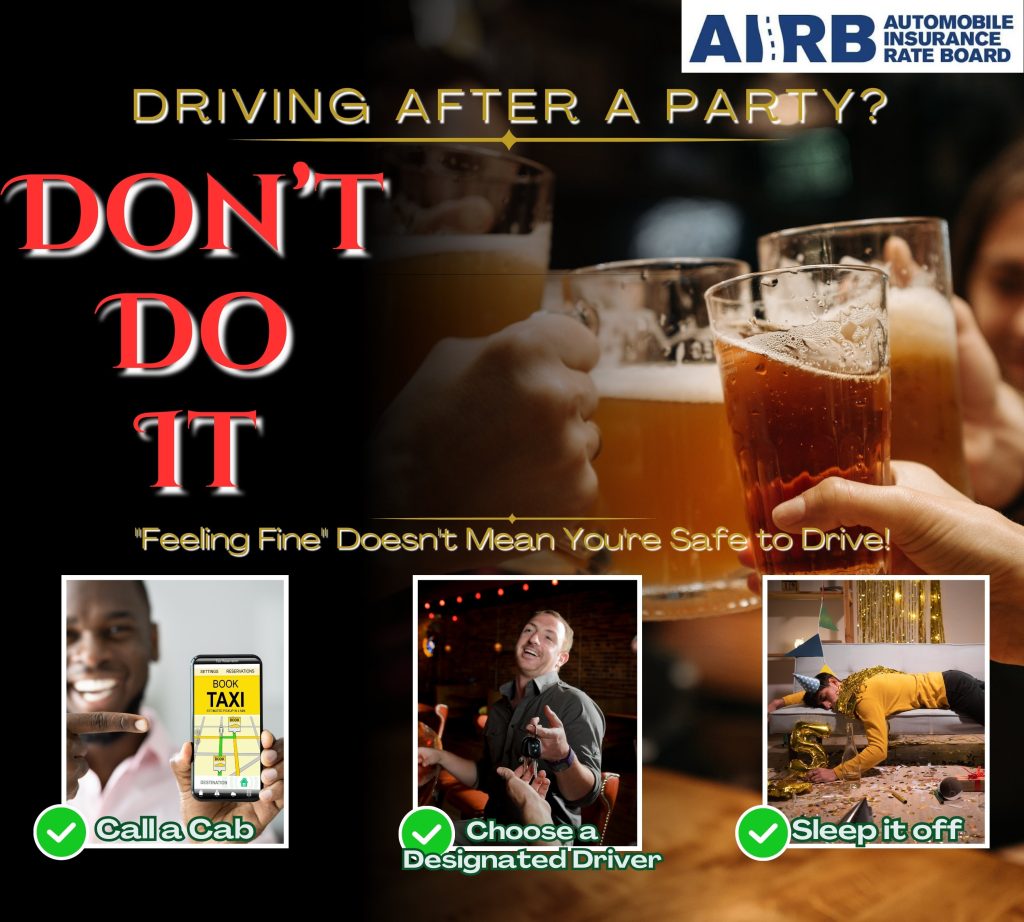
"Feeling Fine" Doesn't Mean You're Safe to Drive
How Does Alcohol Affect Driving Ability?
Alcohol impairs the brain’s decision-making ability well before a driver feels “drunk.” According to research cited by the Traffic Injury Research Foundation (TIRF):
- At approximately .02 Blood Alcohol Concentration (BAC) which is often one standard drink, sound judgment and decision-making already start to decline.
- At .05 BAC: alertness drops and it becomes harder to focus on a task or anticipate hazards.
- At .08 BAC (Canada’s legal limit): self-control, memory, reasoning and motor coordination decline rapidly.
- At .10 BAC: thinking slows significantly, coordination worsens and reaction time lags well behind normal.
In real driving terms: after one standard drink, drivers already struggle with divided-attention tasks like watching for hazards while steering. After four or five drinks, drivers have trouble holding a lane, controlling speed and braking in time. The earliest impairment hits the exact judgment a driver would need to recognize they’re impaired in the first place.
What Is the Mellanby Effect?
The Mellanby Effect is a well-documented phenomenon where a person feels less impaired than their actual blood alcohol concentration indicates, especially as their BAC is falling after a peak.
Here’s why it happens: the body absorbs alcohol quickly, often within minutes of a drink but eliminates it far more slowly, at roughly one standard drink per hour. So, if someone has had five drinks, it takes close to five hours to return to a BAC of .00. No shortcut changes that. Not coffee, not a cold shower, not “walking it off.” Time is the only thing to lower BAC.
Because BAC keeps rising for a while even after the last drink, then falls slowly afterward, perception shifts in a misleading way. For example: a person’s BAC peaks at .08, then falls back to .04. They will typically feel more sober at .04 than they did earlier in the night, when their BAC was climbing toward .04 for the first time, even though the number is identical. That’s because the brain compares how it feels now to how it felt at the peak (.08), not to how it felt completely sober (.00).
TIRF describes seeing this pattern directly in police impairment training: volunteers who confidently refuse to drive early in the night, at .01 to .02 BAC, will sometimes say they’d consider driving later, once their BAC has peaked and fallen back into the same .04 to .06 range and are shocked to learn their BAC hasn’t dropped nearly as far as they assumed.
Is It Safe to Drive After Drinking If You “Feel Fine”?
No. Feeling more sober is not the same as being sober and self-assessment of impairment is unreliable once a person has started drinking. Two facts are worth remembering:
- The body eliminates alcohol far slower than it absorbs it. Plan on roughly one hour per standard drink before returning to a BAC of .00.
- A person is a poor judge of their own impairment after drinking. If someone else says a driver shouldn’t get behind the wheel, the assessment should be trusted over the driver’s own perception.
Given the long stretches of highway between many Alberta communities, a lapse in judgment carries risk whether it happens five kilometres from home or fifty. The safest plan is always made before the first drink.
How to Avoid Impaired Driving: Simple Steps
- Decide how you’re getting home before you start drinking.
- Save a rideshare app, taxi number, or trusted contact in your phone ahead of time.
- If hosting, make sure guests have a safe way home arranged.
- If someone says a driver shouldn’t drive, don’t argue, instead believe them.
Summary
Impaired driving isn’t only a problem among reckless drivers. Alcohol affects judgment long before someone feels drunk and a phenomenon called the Mellanby Effect makes drinkers feel more sober than their actual blood alcohol concentration (BAC) which is one of the main reasons otherwise careful, law-abiding Albertans end up driving impaired.
Most people don’t plan a night out thinking, tonight’s the night I drive home impaired. Almost nobody does. Yet impaired driving remains one of Canada’s leading causes of preventable road deaths, with more than 500 impaired driving deaths recorded across the country every year, according to the Traffic Injury Research Foundation (TIRF). If few people plan to drive impaired, why does impaired driving in Alberta and across Canada keep happening?
Understanding the science behind alcohol impairment and why self-assessment fails is a key part of prevention.
Frequently Asked Questions About Impaired Driving
How many impaired driving deaths happen in Canada each year? More than 500 impaired driving-related road deaths are recorded in Canada annually, along with many more injuries, according to TIRF.
What BAC level counts as impaired driving in Canada? Canada’s legal limit is .08 BAC, though judgment and driving ability begin to decline at BAC levels as low as .02 which is well below the legal threshold.
Can you feel sober before your BAC actually drops? Yes. This is called the Mellanby Effect: BAC declines more slowly than it rises, so a person often feels more sober than their actual blood alcohol level indicates as it falls from its peak.
Does coffee or exercise sober you up faster? No. Time is the only factor which can lower BAC. Coffee, cold showers and exercise do not speed up alcohol elimination.
How long does it take for one standard drink to leave your system? Roughly one hour per standard drink, though this varies by individual factors like body weight, food intake and metabolism.
Plan a Safe Ride Home
A safe ride home is always the right call. No exceptions, no shortcuts. Arrange a designated driver, rideshare, or cab before you start drinking, not after.