Minor vs. Major Traffic Convictions in Alberta
What’s the Difference?
In Alberta, traffic convictions fall into two main categories: minor and major. Minor convictions cover everyday slip-ups like following too closely or missing a stop sign. Major convictions cover higher-risk behaviour like racing, careless driving or distracted driving. Both stay on your record and can affect your insurance for three years from the conviction date, but major convictions are treated as a bigger red flag by insurers and a single major conviction can raise your premium by roughly 31%. Criminal Code convictions, like impaired driving, are a separate, even more serious category and those stick around for four years.
Why Does It Matter Whether a Ticket Is “Minor” or “Major”?
Not all tickets are created equal and your insurance provider knows it. Alberta’s Automobile Insurance Rate Board (AIRB) sets out exactly which offences count as minor and which count as major and insurers use that classification to decide how much of a surcharge to add to your premium. A missed stop sign and a school-zone speeding ticket might both cost you at the checkout counter, but only one of them is going to make your insurer raise an eyebrow.
What Counts as a Minor Conviction?
Minor convictions are generally the “everyone’s had a moment” category with common mistakes that break the rules of the road without being especially reckless. A few examples:
- Driving at an unreasonable rate of speed
- Speeding by smaller margins (up to 30 km/h over, depending on the zone)
- Following too closely
- Failing to yield the right of way
- Failing to stop at a stop sign, yield sign, or red/yellow light
- Improper turns or unsafe lane changes
- Failing to signal
None of these are great habits, but Alberta treats them as lower severity.
What Counts as a Major Conviction?
Major convictions are where things get more serious. These offences that put people at meaningfully higher risk. A few examples:
- Careless driving
- Racing or driving on a bet
- Speeding by more than 50 km/h over the limit
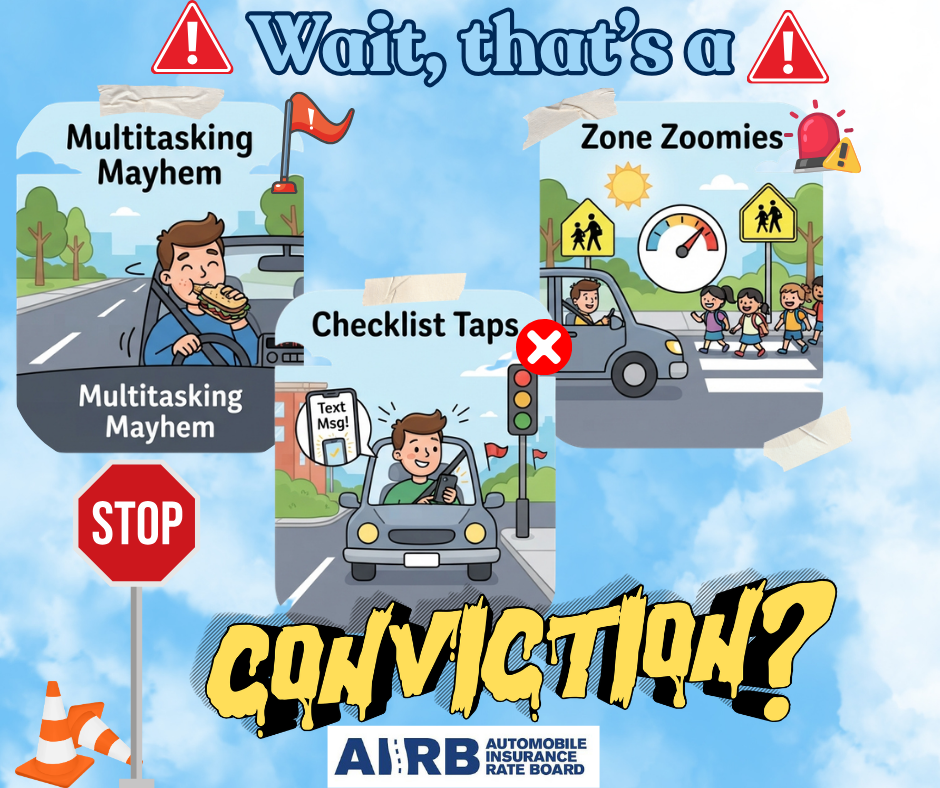
- Speeding in a school or playground zone
- Distracted driving (using a handheld phone, texting, personal grooming, programming GPS while driving, etc.)
- Failing to stop for a school bus
- Failing to remain at the scene of an accident
- Failing to stop for a peace officer
These are the convictions insurers weigh most heavily, since they’re linked to a meaningfully higher risk of a serious collision.
How Long Do These Convictions Stick Around?
Here’s the part that actually affects your wallet: both minor and major convictions can impact your insurance premium for three years from the conviction date. After that three-year mark passes, the conviction should no longer affect your rate. Criminal Code convictions (the most serious tier), covering things like impaired driving or dangerous driving causing bodily harm can affect your record for four years instead.
Does a Major Conviction Always Cost More Than a Minor One?
Generally, yes. Major convictions are treated as a stronger signal of risk, so they tend to carry a steeper insurance surcharge than minor ones. Exactly how much varies by insurer, but as a general benchmark, a single major conviction can increase your premium by roughly 31% as compared to a smaller bump from most minor convictions. The pattern holds either way: the more serious the offence category, the bigger the hit to your premium.
The Bottom Line for Alberta Drivers
Nobody plans to get a ticket. But knowing the difference between minor and major can help make sense of why one moving violation barely nudges your premium while another one sends it climbing. The safest (and cheapest) strategy is still the boring one: stop fully, signal early, keep your phone out of reach and give school buses and playground zones the extra care they deserve.
Frequently Asked Questions
What’s the difference between a minor and major traffic conviction in Alberta? Minor convictions cover common driving mistakes like following too closely or missing a stop sign. Major convictions cover higher-risk behaviour like careless driving, racing or distracted driving.
How long does a traffic conviction affect my insurance in Alberta? Both minor and major convictions can affect your premium for three years from the conviction date. Criminal Code convictions can affect it for four years.
Is speeding in a school zone a minor or major conviction? It’s classified as a major conviction in Alberta.
Is distracted driving a major conviction? Yes, distracted driving (using a handheld device, texting, or similar behaviour behind the wheel) is classified as a major conviction.
Does a major conviction always cost more on my insurance than a minor one? Generally yes, major convictions are treated as a higher risk indicator, so they typically carry a bigger insurance surcharge than minor convictions. A single major conviction can raise your premium by roughly 31%.
How much can a major conviction raise my insurance premium? As a general benchmark, one major conviction can increase your premium by roughly 31%. The exact amount varies by insurer.
Are Criminal Code driving offences the same as major convictions? No. Criminal Code convictions (like impaired driving or dangerous driving causing bodily harm) are a separate, more serious category with their own surcharge rules and a longer four-year impact on your record.