
Accidents and claims
Learn what to do after an auto accident in Alberta, how to file an insurance claim, understand DCPD and fault determination rules, and access accident benefits coverage.
Making a claim
Your insurance company will let you know what information they need to collect to assess your coverage and responsibility in the case of an accident.
Steps to follow after an accident
The AIRB hopes you never have an accident, but if it happens, there are specific steps you must take.
Step 1. Contact the police or ambulance service
In Alberta, you must report an accident to the police if the total damage to both vehicles is over $5,000, if someone is injured, if property is damaged, or if one of the drivers doesn’t have auto insurance. If anyone is seriously injured, call 911. If your car was stolen or damaged in a hit-and-run, file a report at the nearest police station. In some cases, you can file your report online.
Step 2. Gather information about the accident
- Collect the other driver’s name, address, phone number, driver’s license number, registration certificate, and insurance information.
- Record the accident details – how, when, and where it happened; the time, date, location, speed, weather, and road conditions.
- Take photos if you can safely do so.
- Look for any witnesses to the accident and take down their names/contact information.
Step 3. Call your insurer
Call your insurance representative as soon as possible and describe the circumstances of the accident as best you can. Keep supporting documents like photos, police report numbers, towing bills, etc. Your insurance representative may ask you to complete a written declaration (aka. proof of loss) within 90 days of the accident.
Step 4. Agree on a settlement amount
A claims specialist or adjuster will contact you to examine the damage to your car. You and your insurance company must agree on the repair or settlement amount. Your insurance company will also determine the terms and conditions of your car’s repair or replacement, depending on your policy coverage.
Vehicle damage vs personal injuries
Physical damage to your vehicle
Insurers use fault-determination rules to determine your responsibility; the police do not determine fault. Responsibility is the extent to which you are at fault for an accident.
If you are at fault for the accident, the insurance company will only pay to repair your vehicle if you have purchased collision coverage.
If you are not at fault, your insurance company will provide coverage through Direct Compensation for Property Damage. If someone steals your vehicle, your insurance company will only compensate you for the loss or damage if you purchased specified perils, comprehensive, or all perils coverage.
You have the right to have your vehicle’s damage estimated and repaired at the auto body shop of your choice. Your insurance company may accept the repair shop’s estimate of the damage or may want to appraise the damage to the vehicle. When you select the shop, the responsibility for a satisfactory repair job rests with you, not the insurer.
Injury to you or your passengers
If you have been injured in an auto accident in Alberta, you are entitled to accident benefits coverage regardless of whether you were at fault for the accident.
See a Primary Health Care Practitioner (chiropractor, medical doctor, physical therapist) as soon as possible for an assessment of your injury and, if needed, treatment advice.
File an injury accident report with the police, then contact your insurance representative for the next steps.
Understanding at-fault and no-fault auto insurance
There has been confusion over Alberta’s insurance system and if the implementation of Direct Compensation for Property Damage (DCPD) is a no-fault system—it is not. The definitions below will help you understand the difference.
At-fault system
The driver who caused the accident is responsible for the damages. Their insurance may cover injuries and property damage claims.
No-fault system
You deal with your own insurance company after an accident, no matter who caused it. Your insurer handles your injury benefits and vehicle damage based on fault-adetermination rules.
Direct compensation for property damage (DCPD)
Under DCPD coverage, fault is established through fault-determination rules, and you will have coverage to the extent you are not-at-fault for the accident.
Fault-determination rules
In Alberta, insurance companies must determine how much each driver is at fault in a DCPD claim. This assessment is conducted using fault-determination rules established by government regulations.
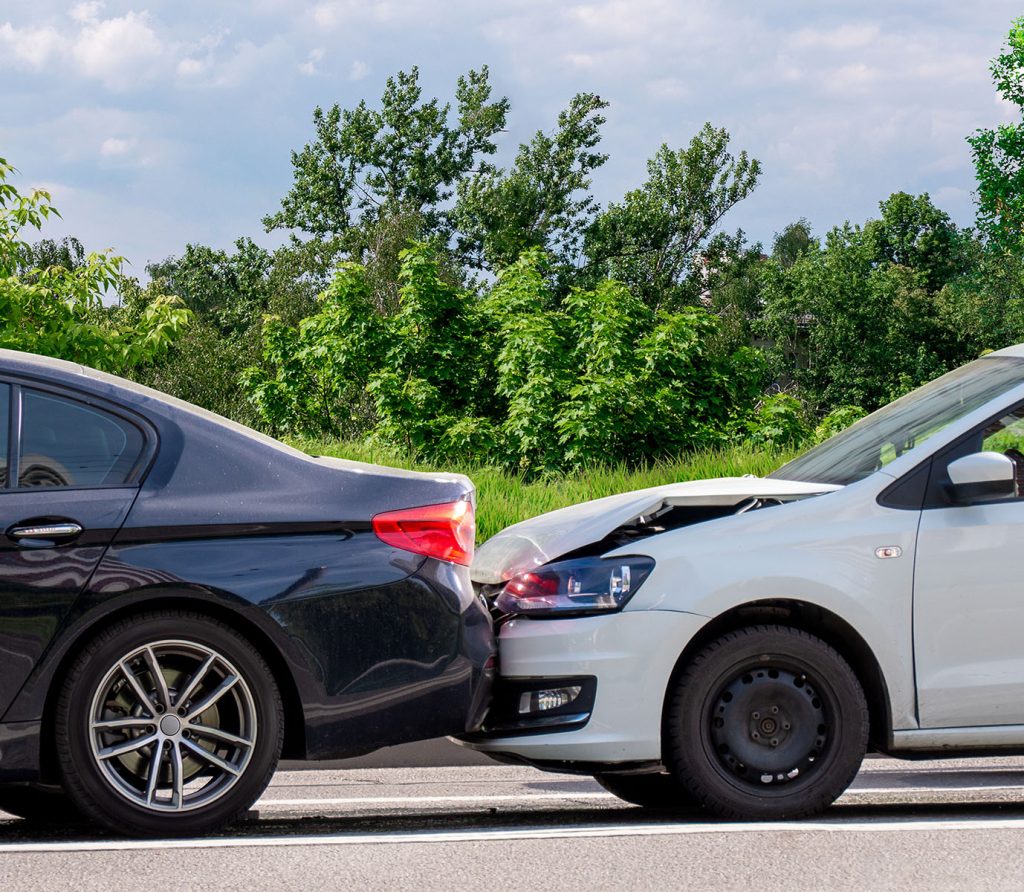
E.g. Driver A stops at a red light, and Driver B hits them from behind. According to the DCPD Regulation, Driver B is 100% at-fault for the accident.
Featured resources
What To Do After a Vehicle Accident
A guide to keep in your vehicle in case you are ever involved in a collision. Includes steps to take and the information you should gather.
Commonly Forgotten Driving Rules
Commonly forgotten driving rules such as following distance, how to handle emergency vehicles, traffic circles and more.
Construction Zone Safety
While road Driving Through Construction construction improves motorist safety in the long run, it increases the risks drivers face in the short term. Be prepared for road construction season in Alberta!
Distracted Driving
Distracted driving is defined as the diversion of attention from driving as a result of the driver focusing on a non-driving object, activity, event
or person. When you drive distracted, you’re putting yourself and others at significant risk of collision, injury, or death. Every incident of distracted driving is entirely preventable.
Impaired Driving
Crashes involving alcohol and/or drugs are one of the leading criminal causes of death in Canada. Approximately 8,600 people are convicted of impaired driving in Alberta each year. Penalties for this offence range from a mandatory minimum fine to life imprisonment, depending on the severity of the offence.
The Cost of Speeding
Posted limits indicate the maximum legal speed permitted in ideal conditions. Driving faster than the maximum speed limit puts yourself and others at risk.