Vehicles travelling in the same direction and lane
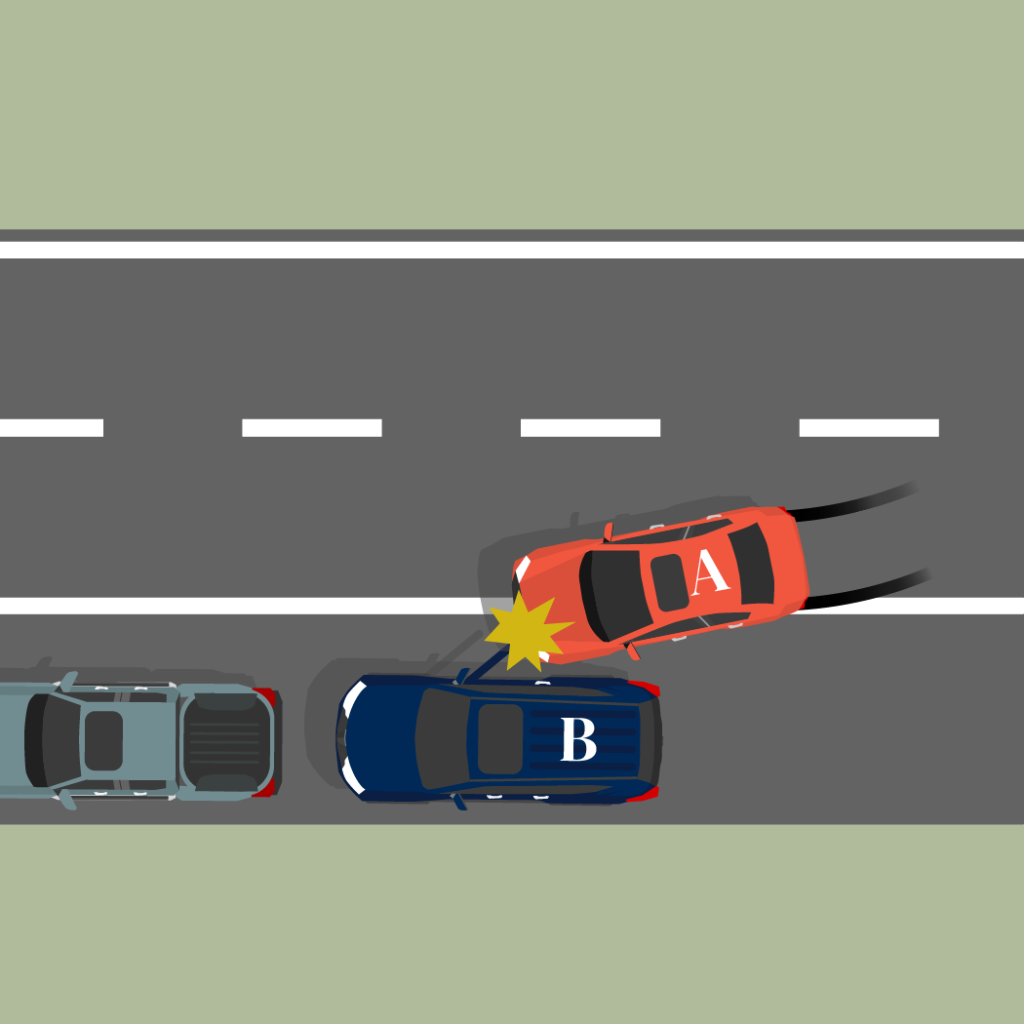
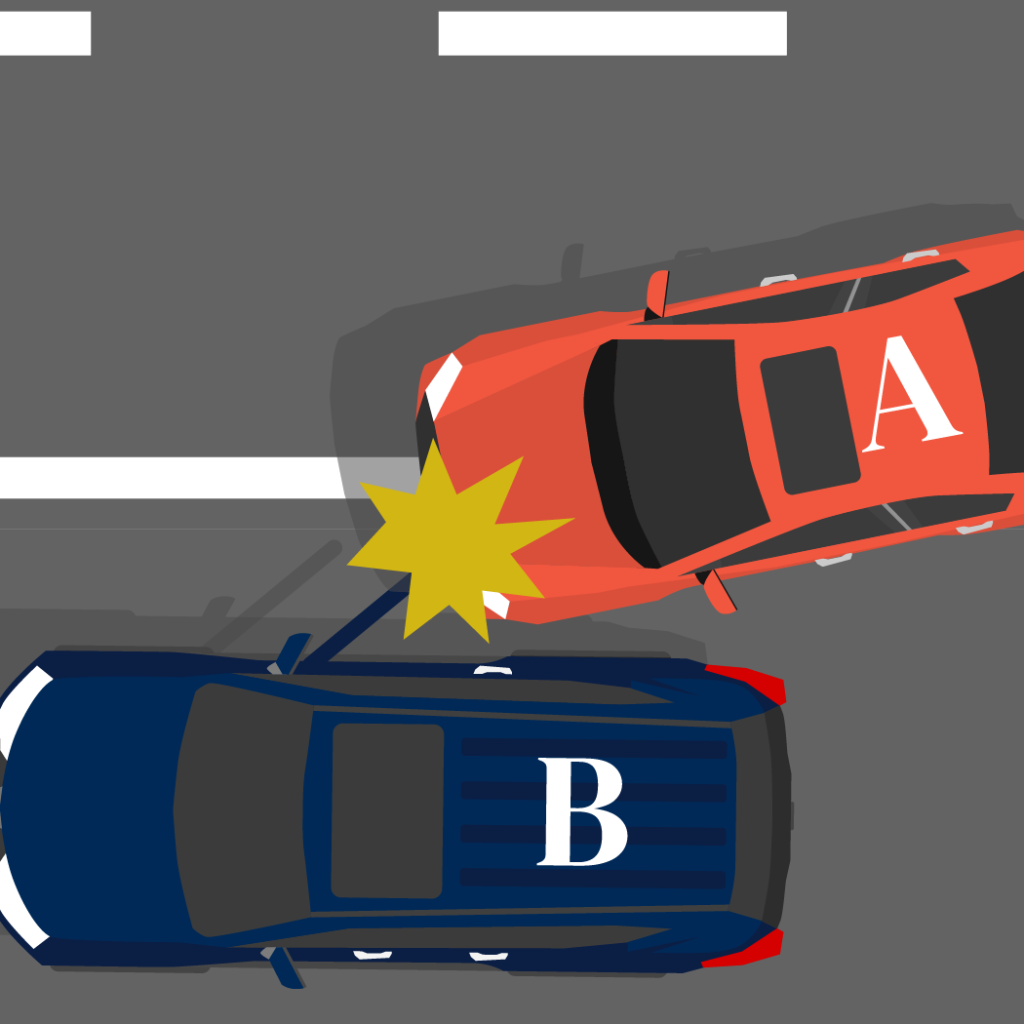
These accidents occur when vehicle A is struck from the rear by vehicle B while both vehicles are travelling in the same direction and in the same lane.
Scenario 1
If vehicle A stops or is moving forward, the driver of vehicle A is not at fault for the accident. The driver of vehicle B is 100 per cent at fault for the accident.
Scenario 2
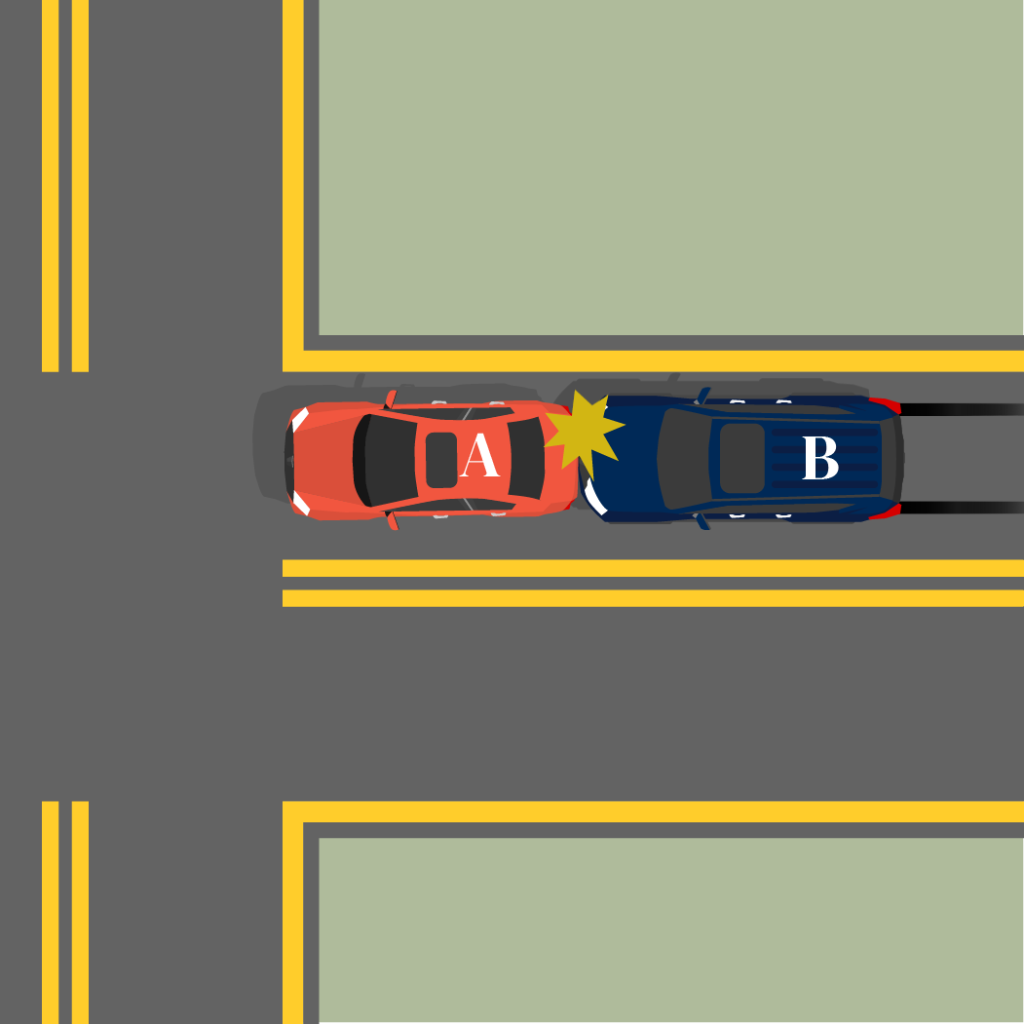
If vehicle A turns right or left to enter a side road, private road, or driveway, the driver of vehicle A is not at fault for the accident. The driver of vehicle B is 100 per cent at fault for the accident.
Scenario 3
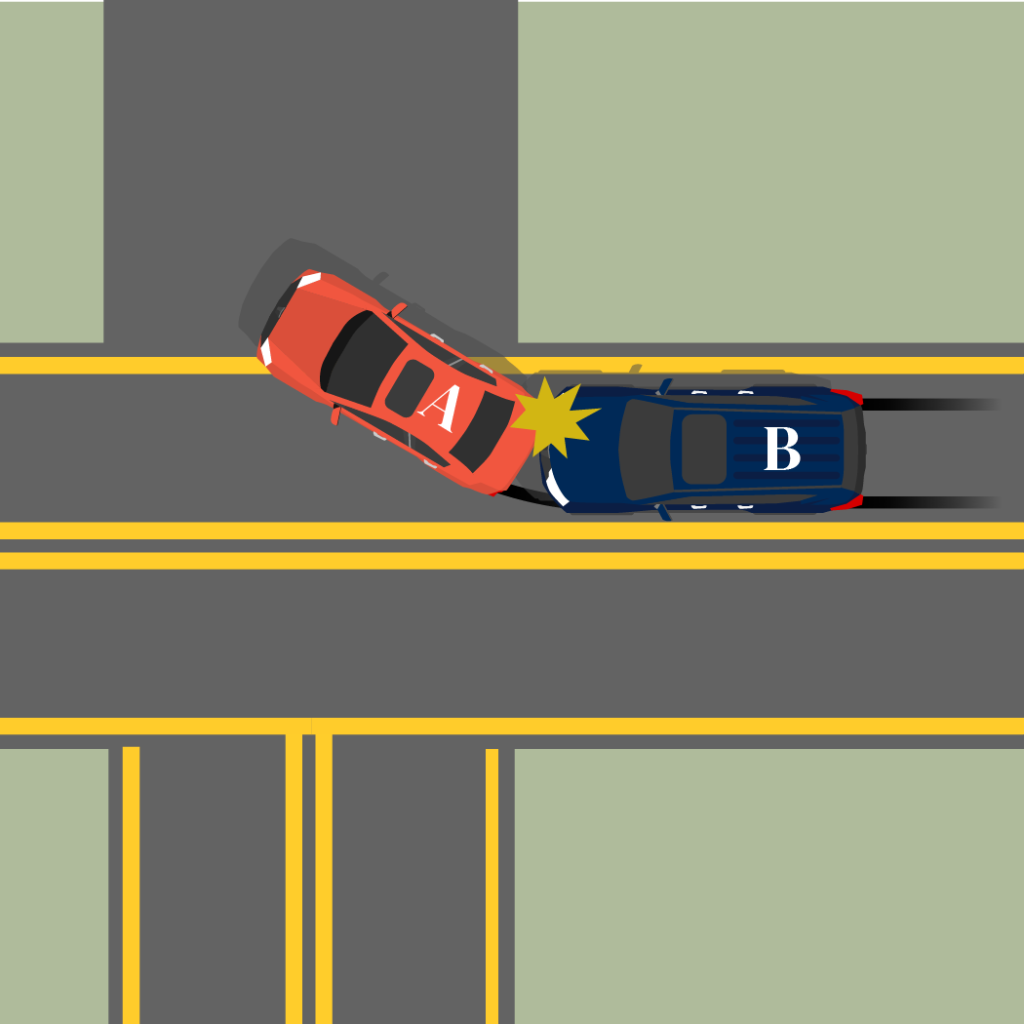
If vehicle A enters a parking place on the right or left side of a highway moving forward, the driver of vehicle A is not at fault for the accident. The driver of vehicle B is 100 per cent at fault for the accident.
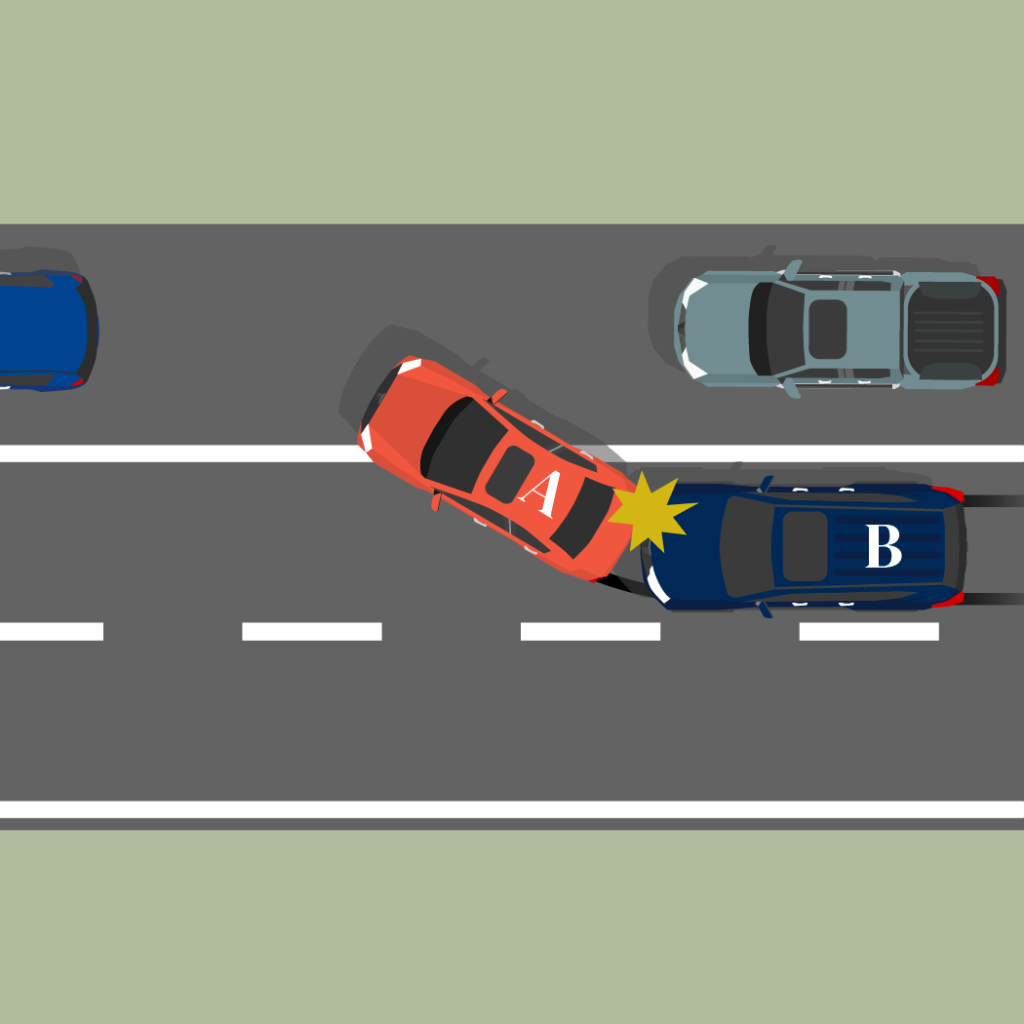
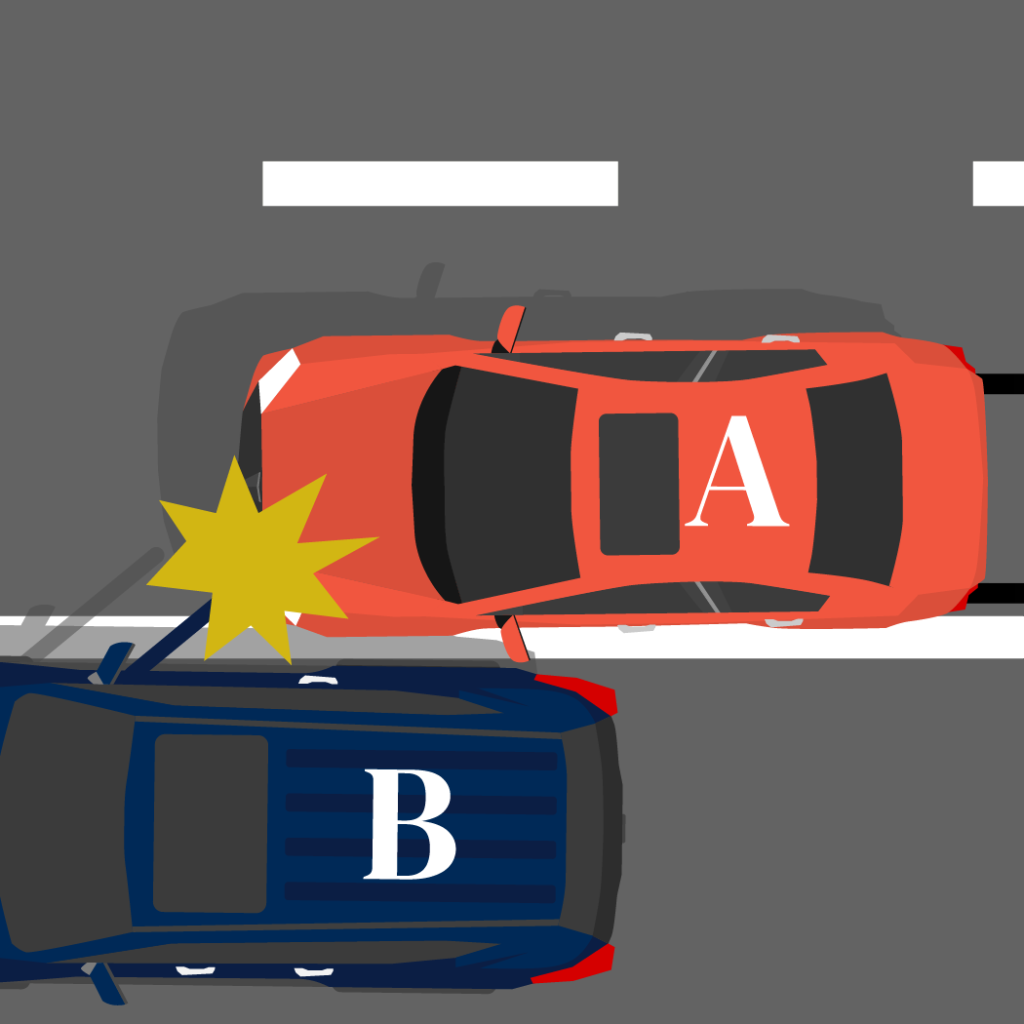
Vehicles travelling in the same direction and adjacent lanes
These accidents occur when vehicles A and B collide while travelling on a highway in the same direction, side by side, and neither overtakes nor passes the other.
Scenario 1
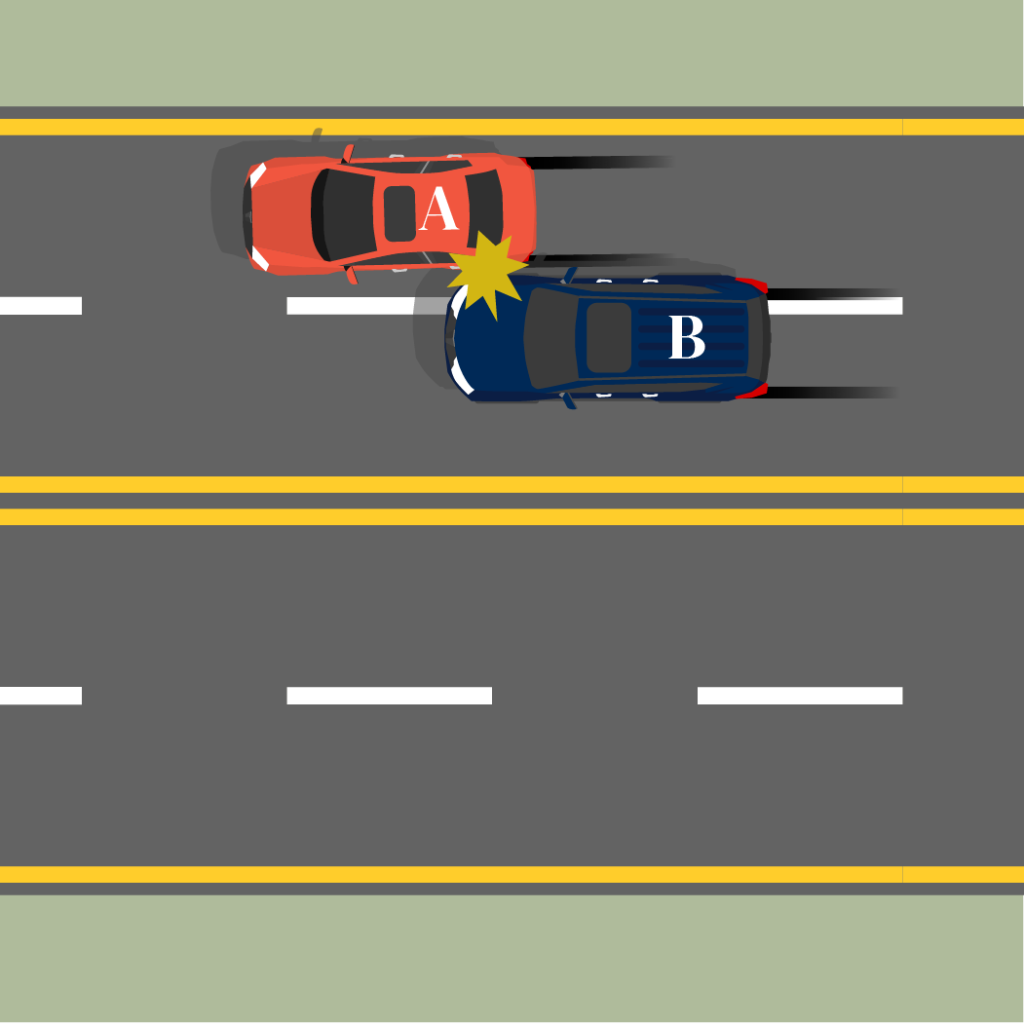
If neither vehicle A nor vehicle B are changing lanes when the accident occurs, and both vehicles are on or over the centre line, then the driver of each vehicle is 50 per cent at fault for the accident.
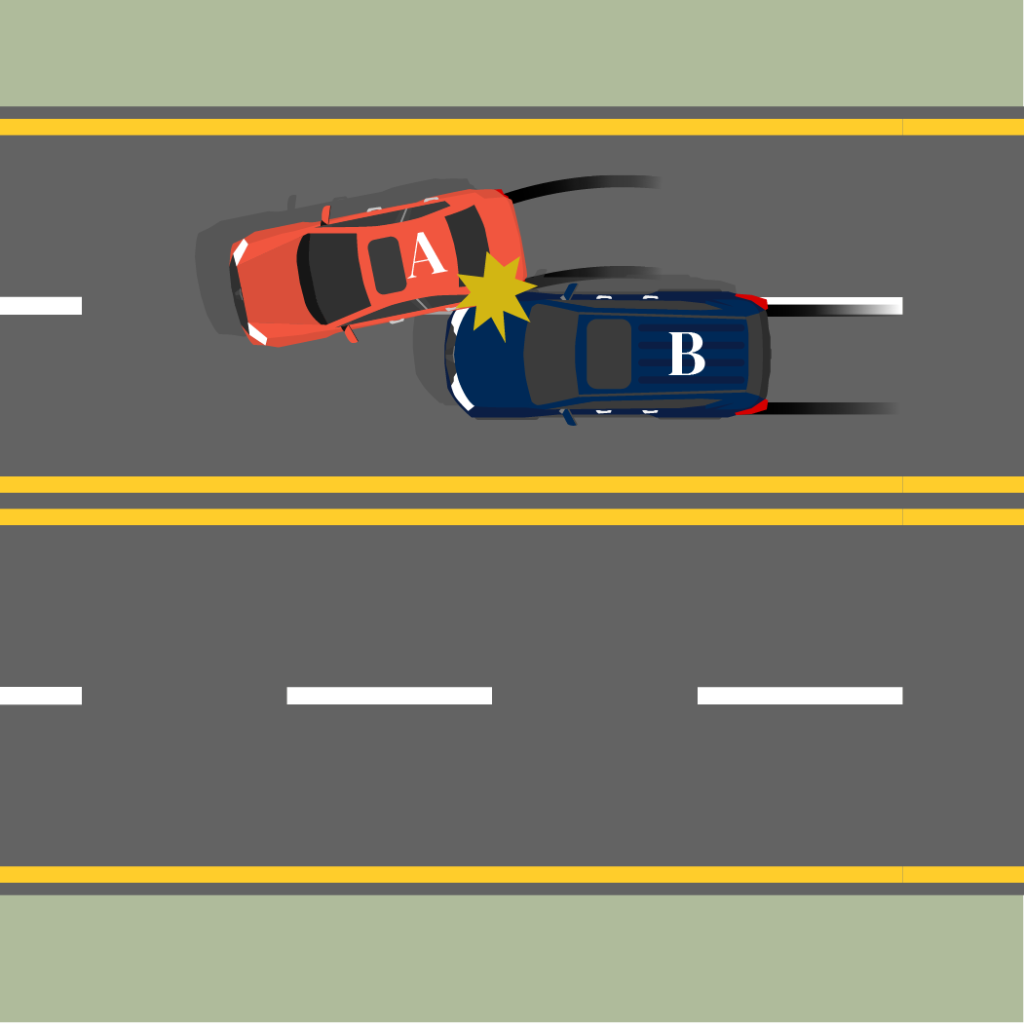
Scenario 2
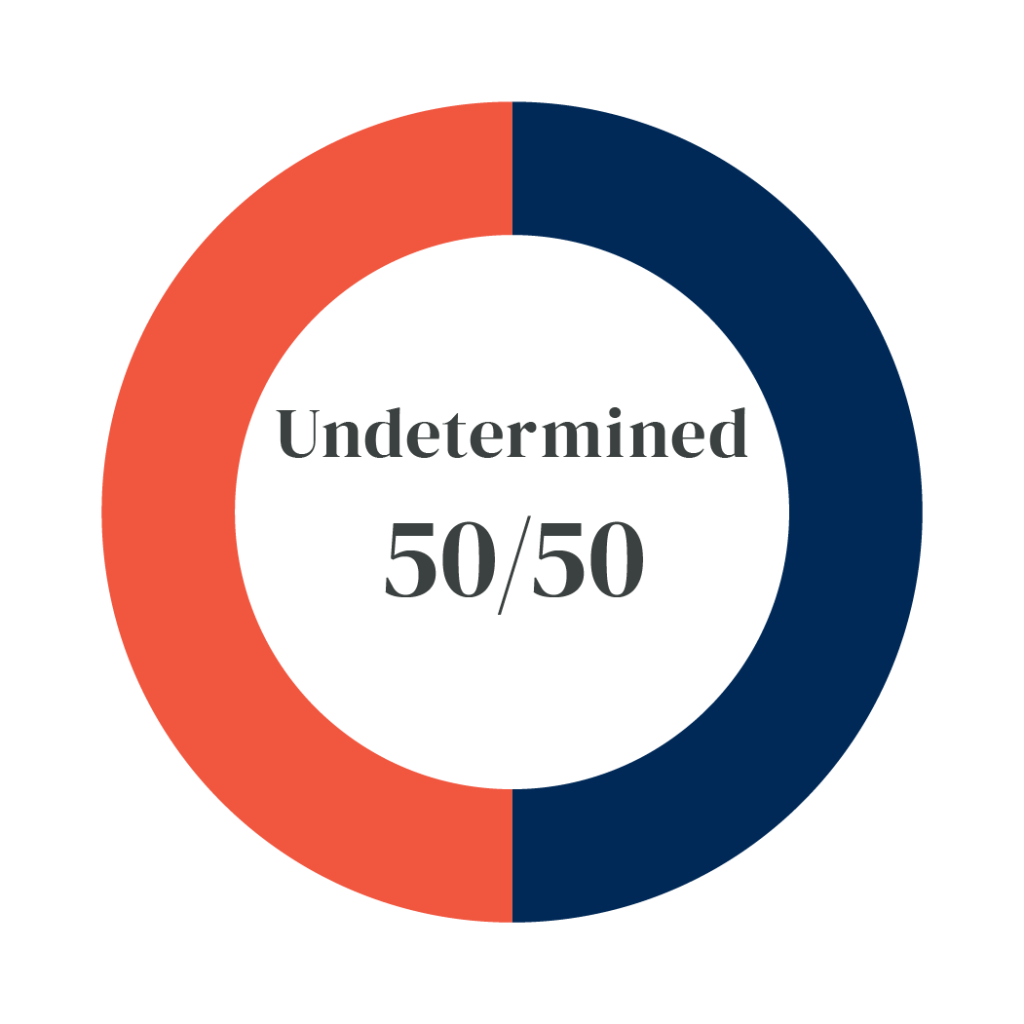
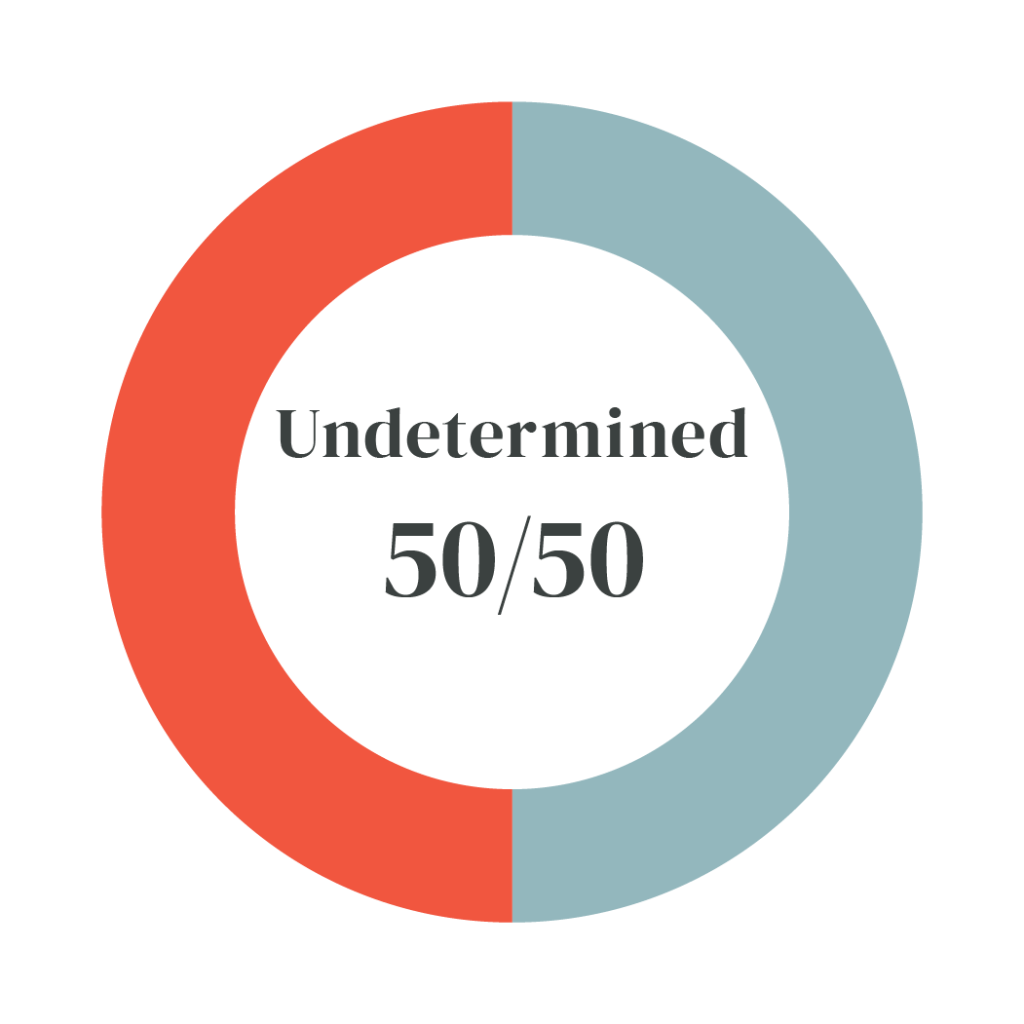
If the accident location cannot be determined, the driver of each vehicle is 50 per cent at fault for the accident.
Scenario 3
If vehicle B changes lanes when the accident occurs, the driver of vehicle A is not at fault for the accident. The driver of vehicle B is 100 per cent at fault for the accident.
Vehicle travelling in the same direction and adjacent lanes – overtaking or passing
These accidents occur when vehicles A and B collide while travelling on a highway in adjacent lanes and vehicle A overtakes or passes vehicle B.
Scenario 1
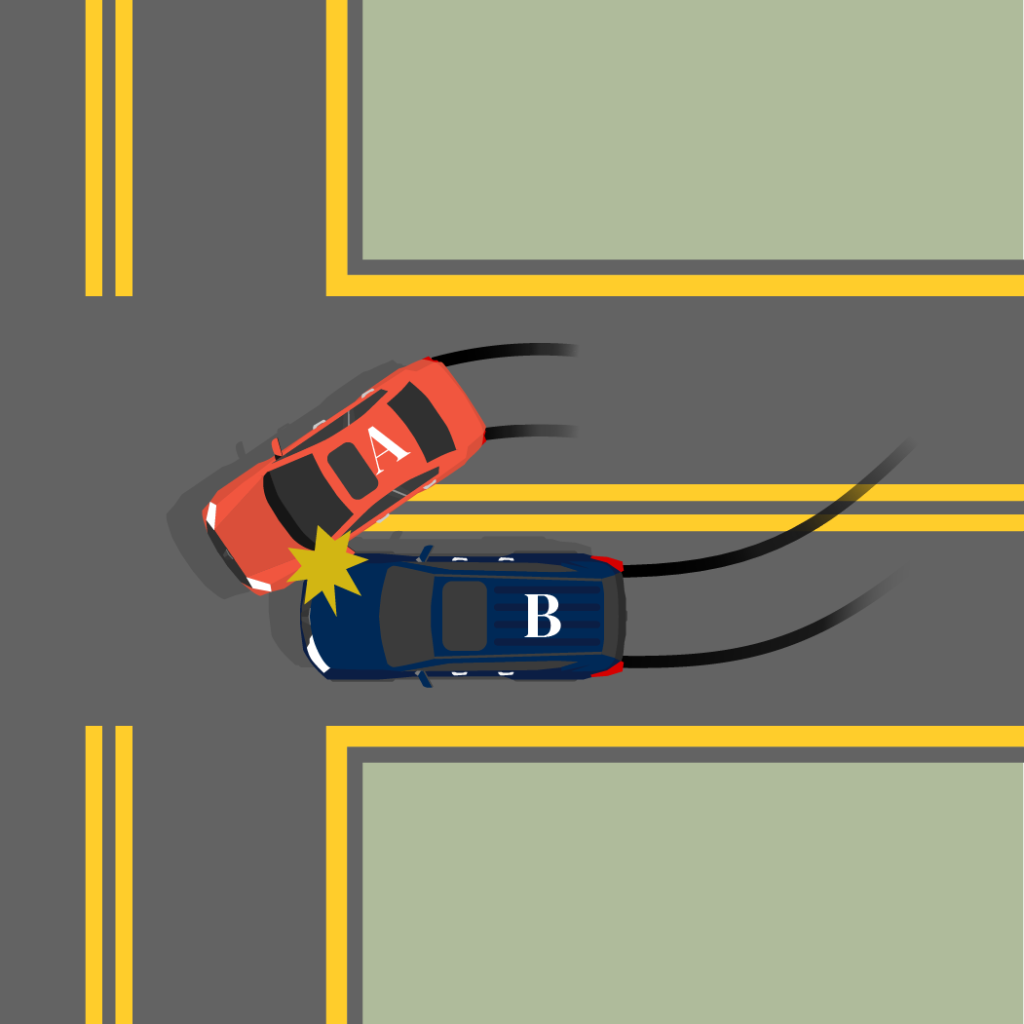
If vehicle A is turning left at an intersection and vehicle B is overtaking or passing vehicle A, the driver of vehicle A is not at fault for the accident. The driver of vehicle B is 100% at fault for the accident.
Scenario 2
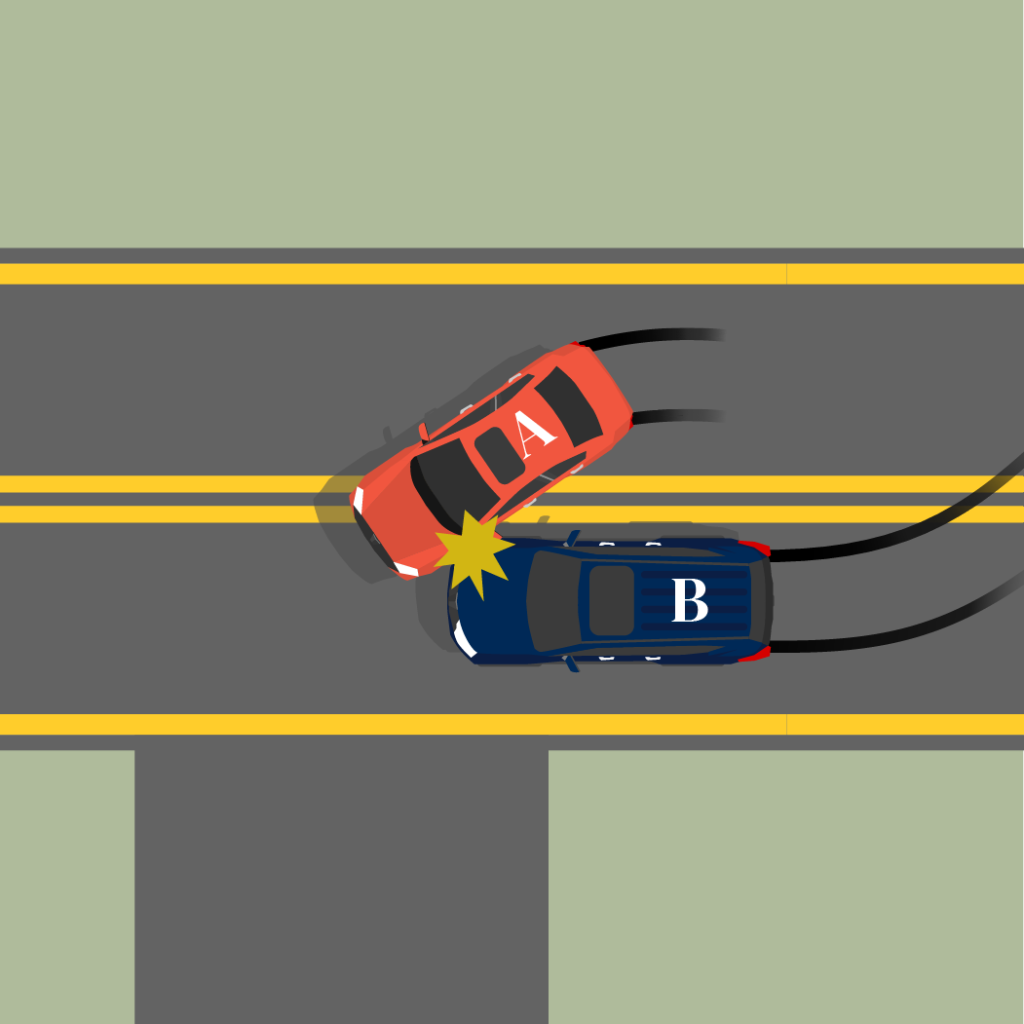
If vehicle A is turning left to enter a parking place, private road, or driveway and vehicle B is overtaking or passing vehicle A, the driver of vehicle A is 75% at fault for the accident, and the driver of vehicle B is 25% at fault for the accident.
Scenario 3
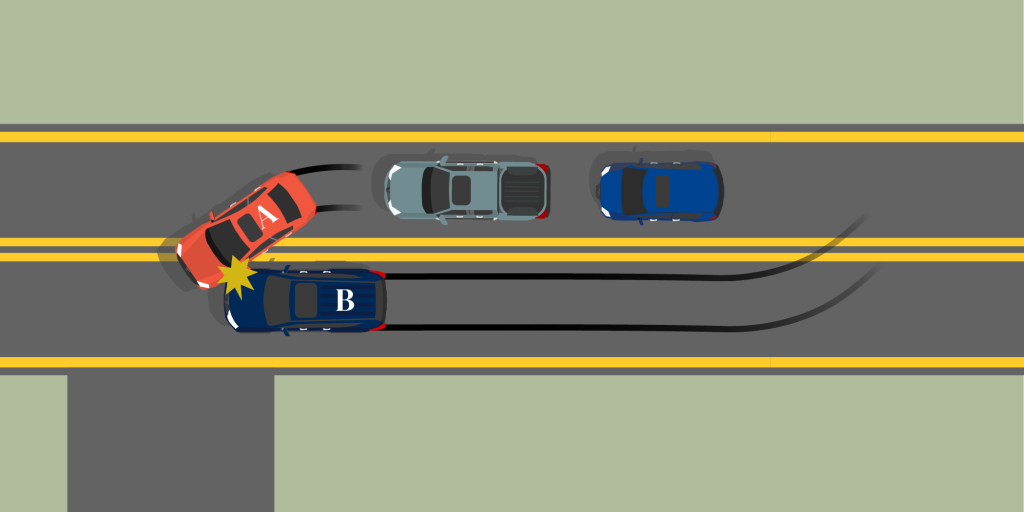
If vehicle A is turning left to enter a parking place, private road, or driveway and vehicle B is overtaking or passing one or more vehicles stopped behind vehicle A, the driver of vehicle A is not at fault for the accident, and the driver of vehicle B is 100% at fault for the accident.
Vehicles travelling in opposite directions
These accidents occur when vehicles A and B collide while travelling in opposite directions and adjacent lanes.
Scenario 1
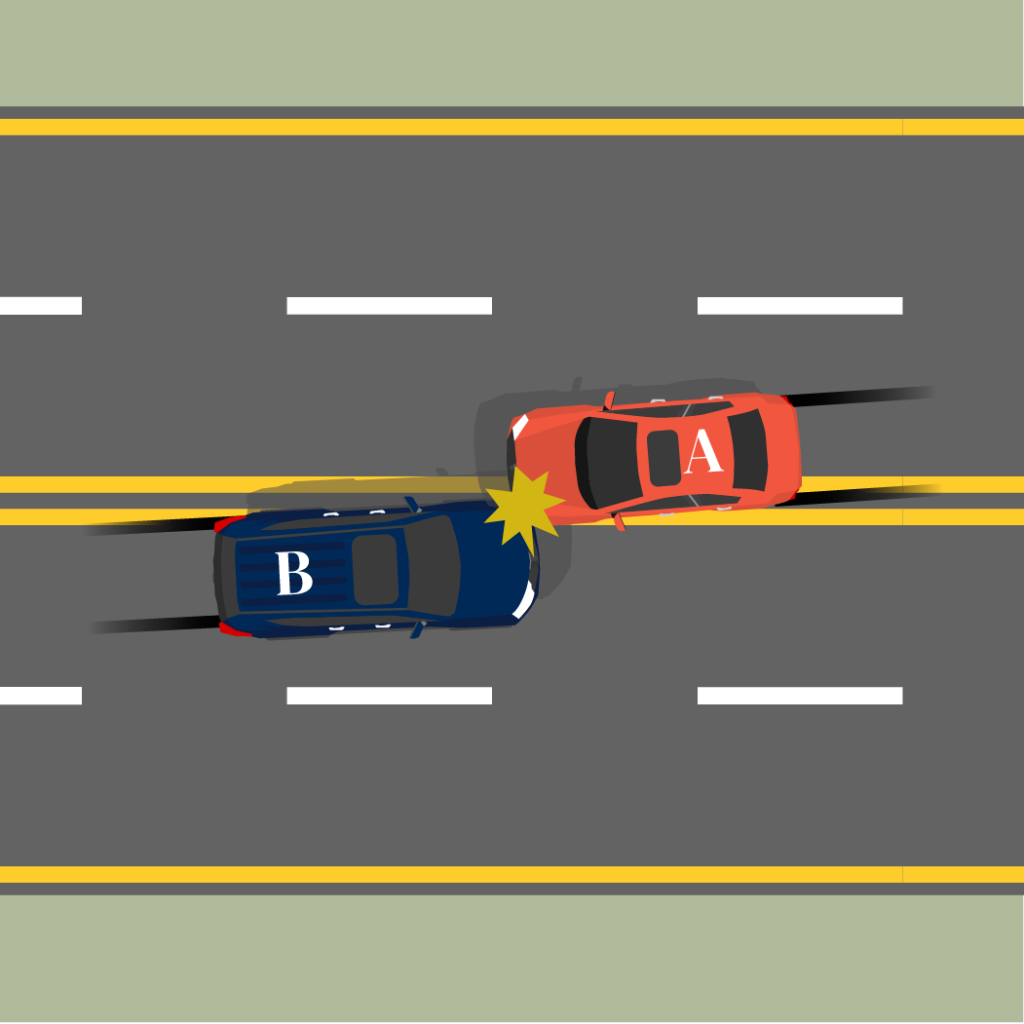
If neither vehicle A nor vehicle B are changing lanes, and both vehicles are on or over the centre line when the accident occurs, the driver of each vehicle is 50% at fault for the accident.
Scenario 2
If the location of where the accident occurred cannot be determined, the driver of each vehicle is 50% at fault for the accident.
Scenario 3
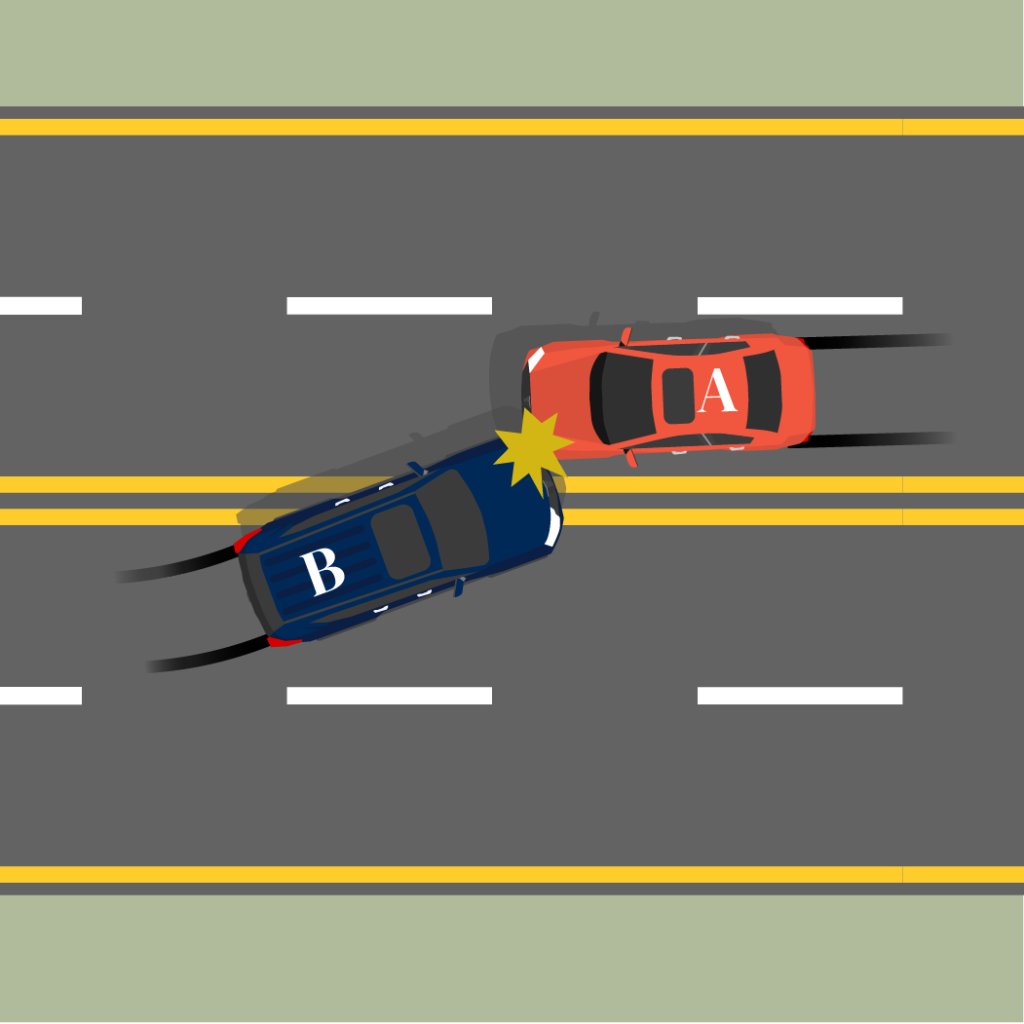
If only vehicle B is over the centre line when the accident occurs, the driver of vehicle A is not at fault for the accident, and the driver of vehicle B is 100% at fault for the accident.
Scenario 4
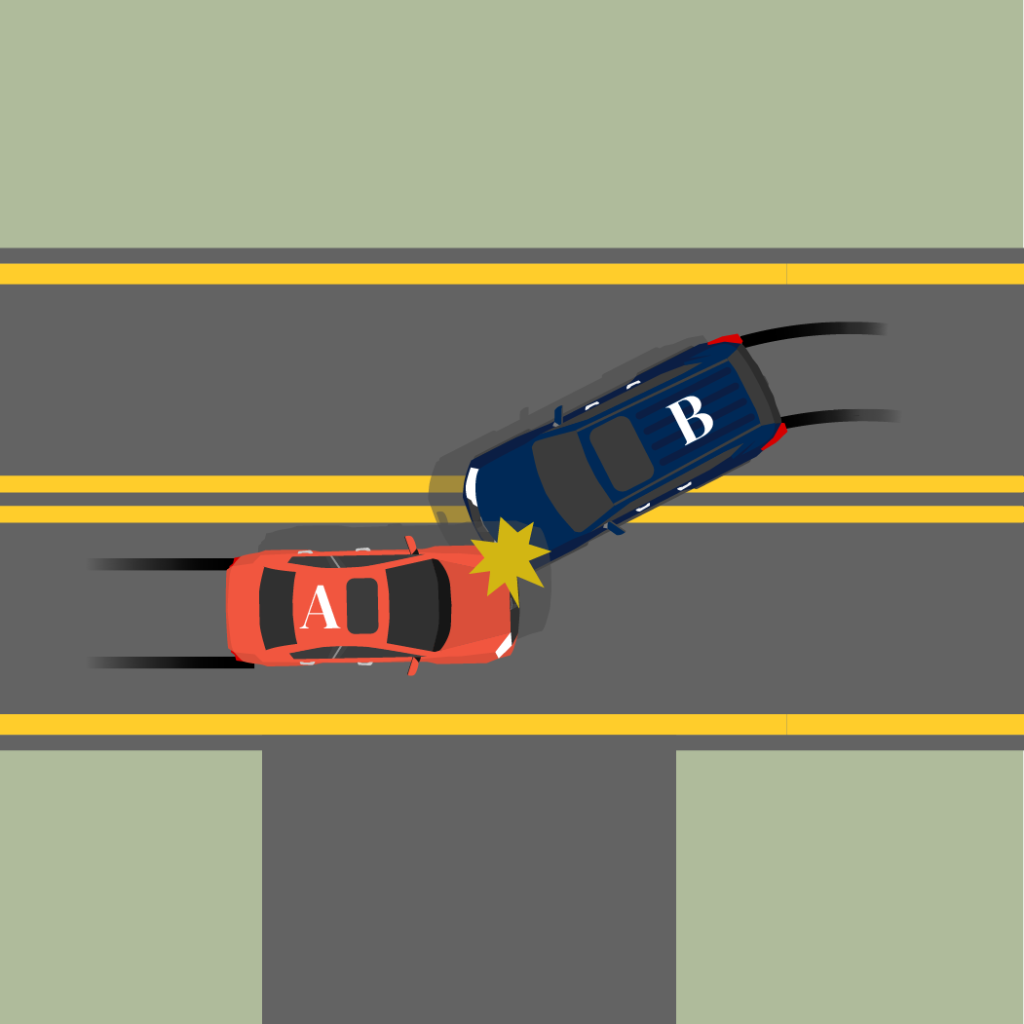
If vehicle B turns left into the path of vehicle A, the driver of vehicle A is not at fault for the accident, and the driver of vehicle B is 100% at fault for the accident.
Scenario 5
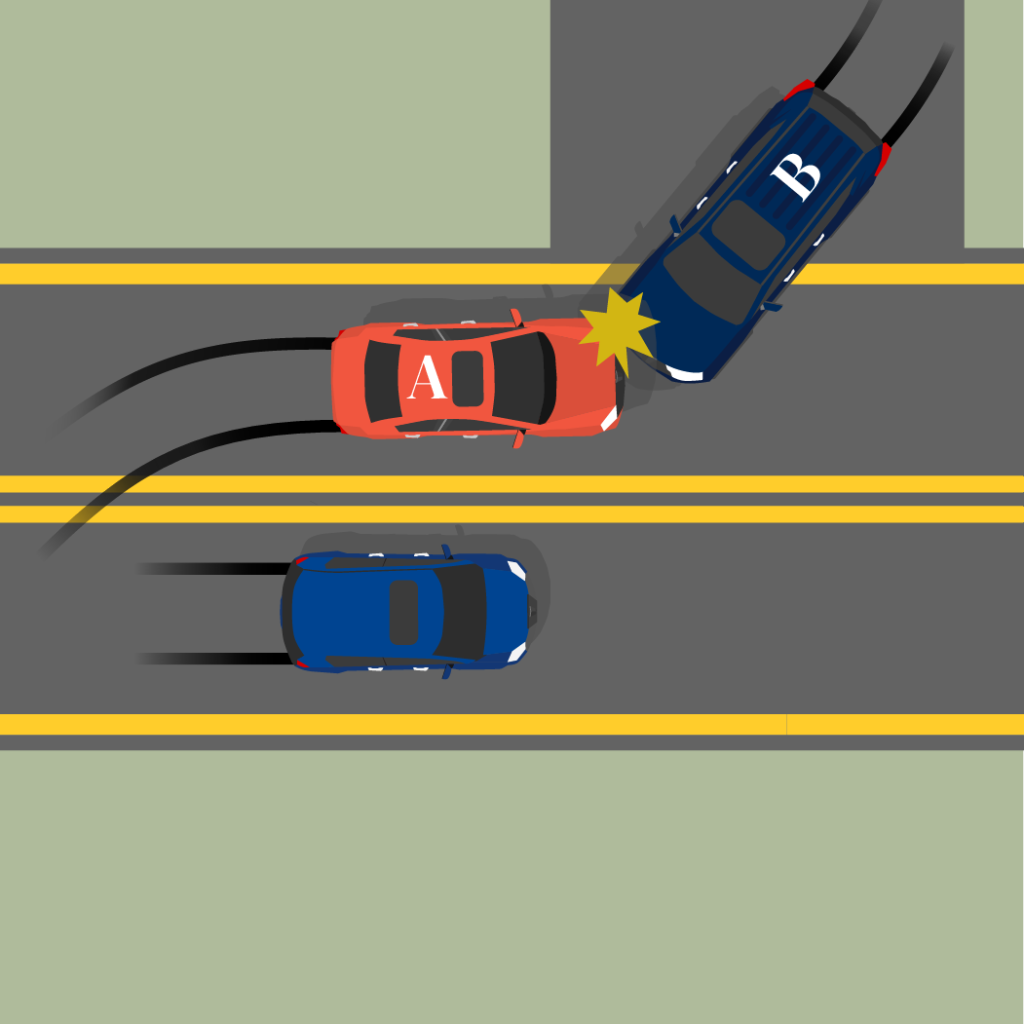
If vehicle B is entering the highway from a parking place, private road, or driveway, and vehicle A is overtaking or passing another vehicle, the driver of vehicle A is not at fault for the accident, and the driver of vehicle B is 100% at fault for the accident.
Vehicle entering highway from a parking place, private road, or driveway
These accidents occur when vehicles A and B collide while vehicle A is travelling on a highway and vehicle B is entering the highway from a parking place, private road, or driveway.
Scenario 1
If vehicle B is entering the highway from a parking place and vehicle A is travelling past the parking place on the highway, the driver of vehicle A is not at fault for the accident. The driver of vehicle B is 100% at fault for the accident.
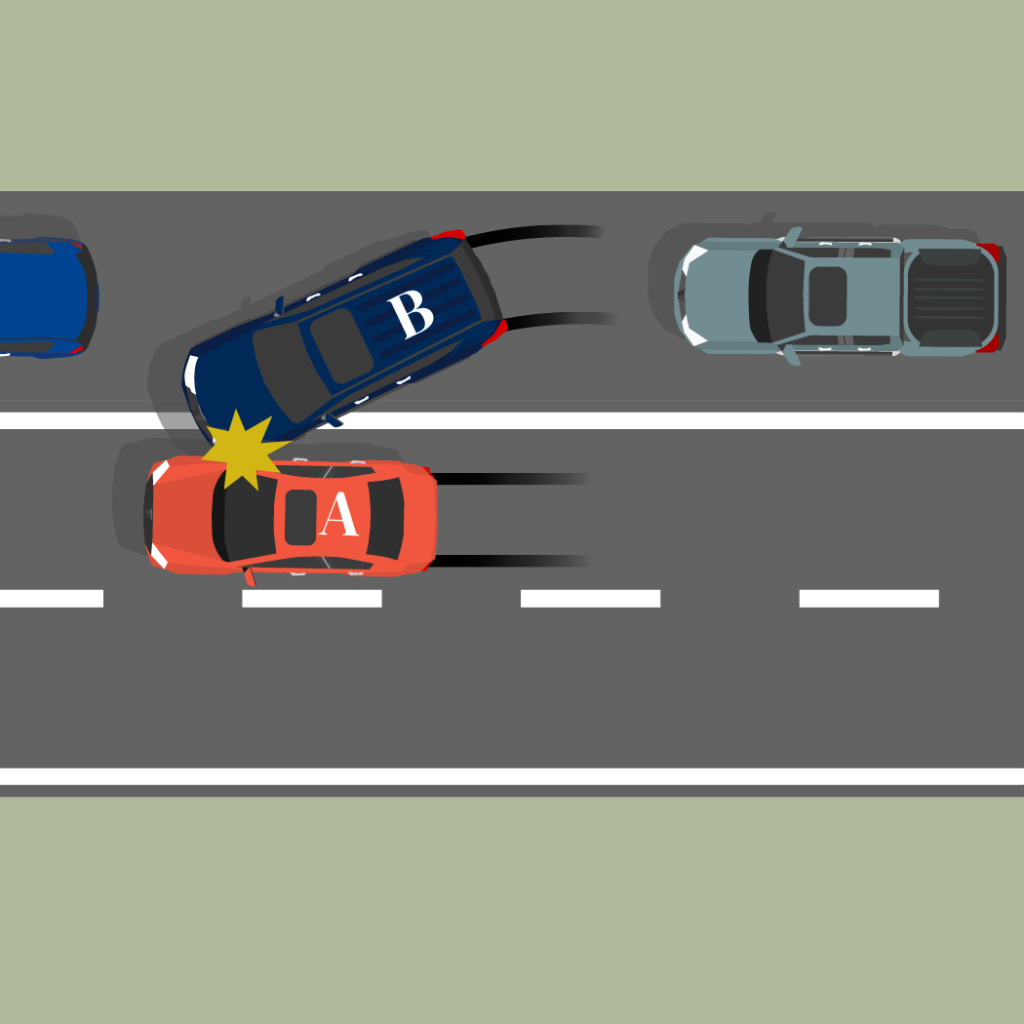
Scenario 2
If vehicle B is entering the highway from a private road or a driveway, and vehicle A is travelling past the private road or driveway on the highway where there are no traffic signs at the intersection, the driver of vehicle A is not at fault for the accident. The driver of vehicle B is 100% at fault for the accident.
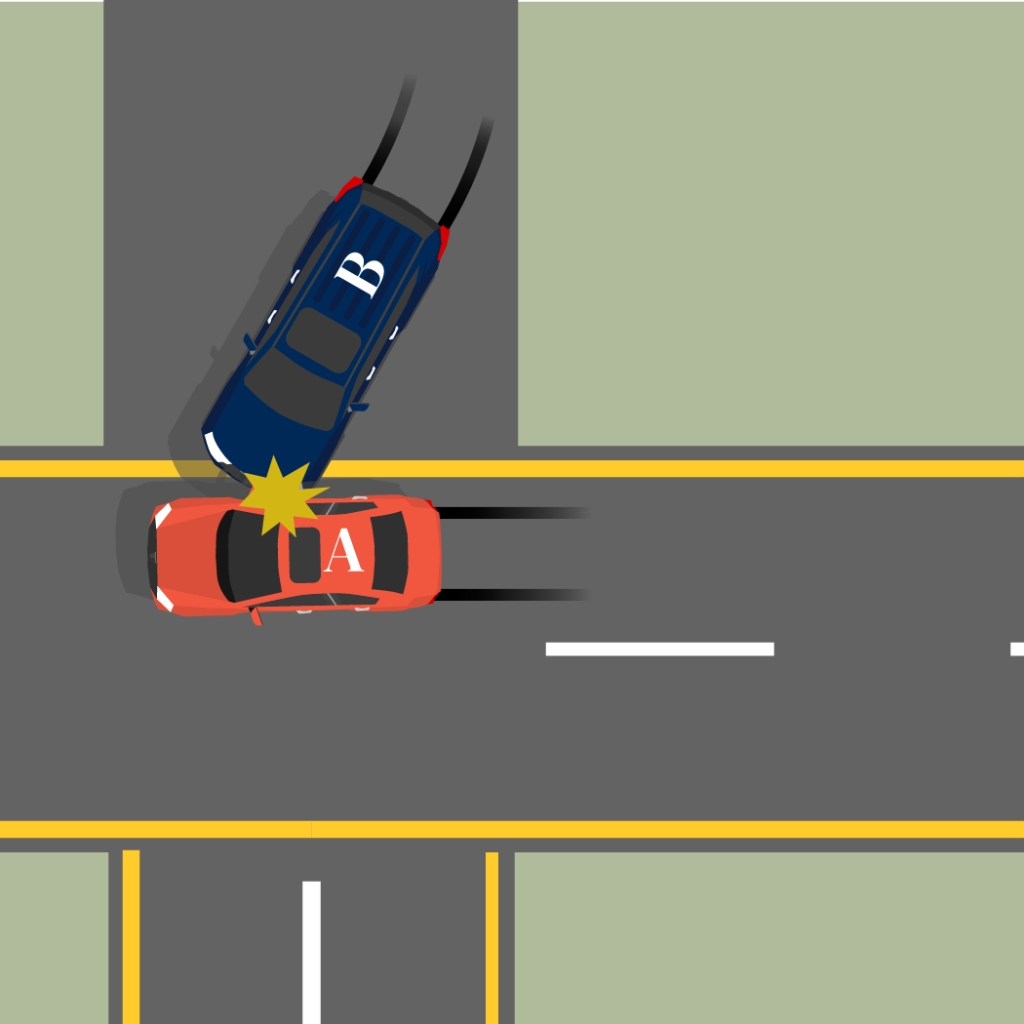
Vehicle entering a controlled highway
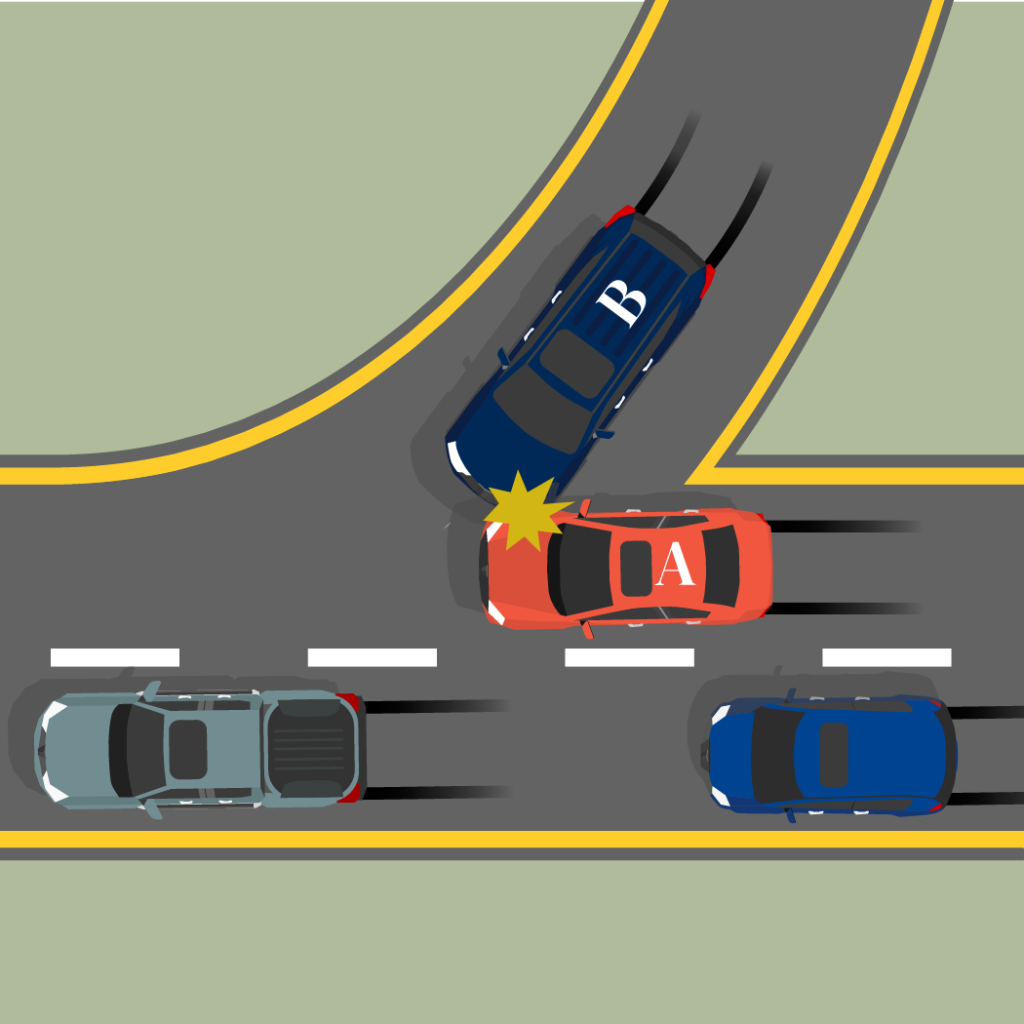
Vehicles A and B collide while vehicle A is travelling on a controlled highway, and vehicle B enters the controlled highway from an entrance lane.
In this scenario, the driver of vehicle A is not at fault for the accident. The driver of vehicle B is 100% at fault for the accident.
Chain reaction accidents
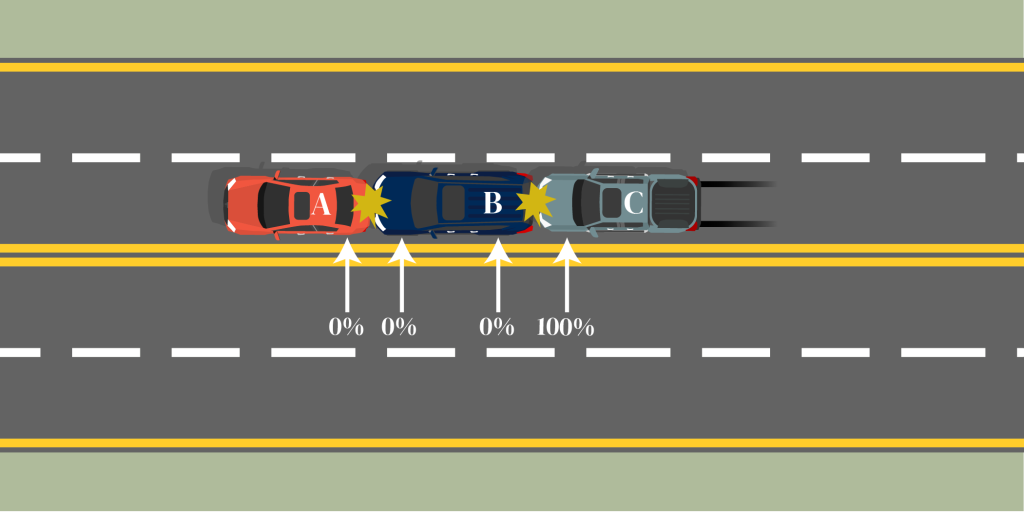
These accidents happen when one or more vehicles are stopped or slowing down, and the back vehicle is struck from behind, leading it to strike the vehicle in front as a result.
The degree of fault for each accident between two vehicles involved in a chain reaction must be determined without reference to any other accidents in the chain reaction.
If all vehicles involved in a chain reaction accident are in forward motion or vehicles A and B are stopped when the accident occurs:
- With respect to the accident between vehicles A and B, neither driver is at fault.
- With respect to the accident between vehicles B and C, the driver of vehicle C is 100% at fault.
In this diagram, vehicles A and B are stopped or slowing down when vehicle B is rear-ended by vehicle C. Vehicle B is then pushed forward and rear-ends vehicle A. Drivers must be far enough behind another vehicle to be able to stop safely, even in an emergency. Therefore, the driver of vehicle C would be 100% at fault.
Pile-ups
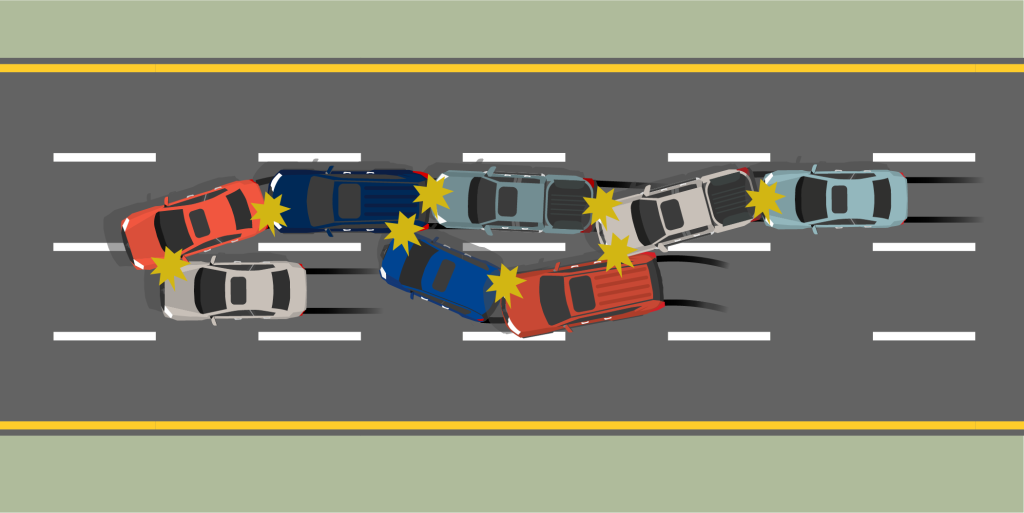
If multiple vehicles are involved in a pile-up, each driver is 50% at fault in each accident between two vehicles.
Intersections without traffic signs or traffic control signs
These accidents occur at an uncontrolled intersection (one without traffic signs or traffic control signs) when a vehicle is driving through the intersection and collides with an approaching vehicle, whose driver has failed to yield.
Scenario 1
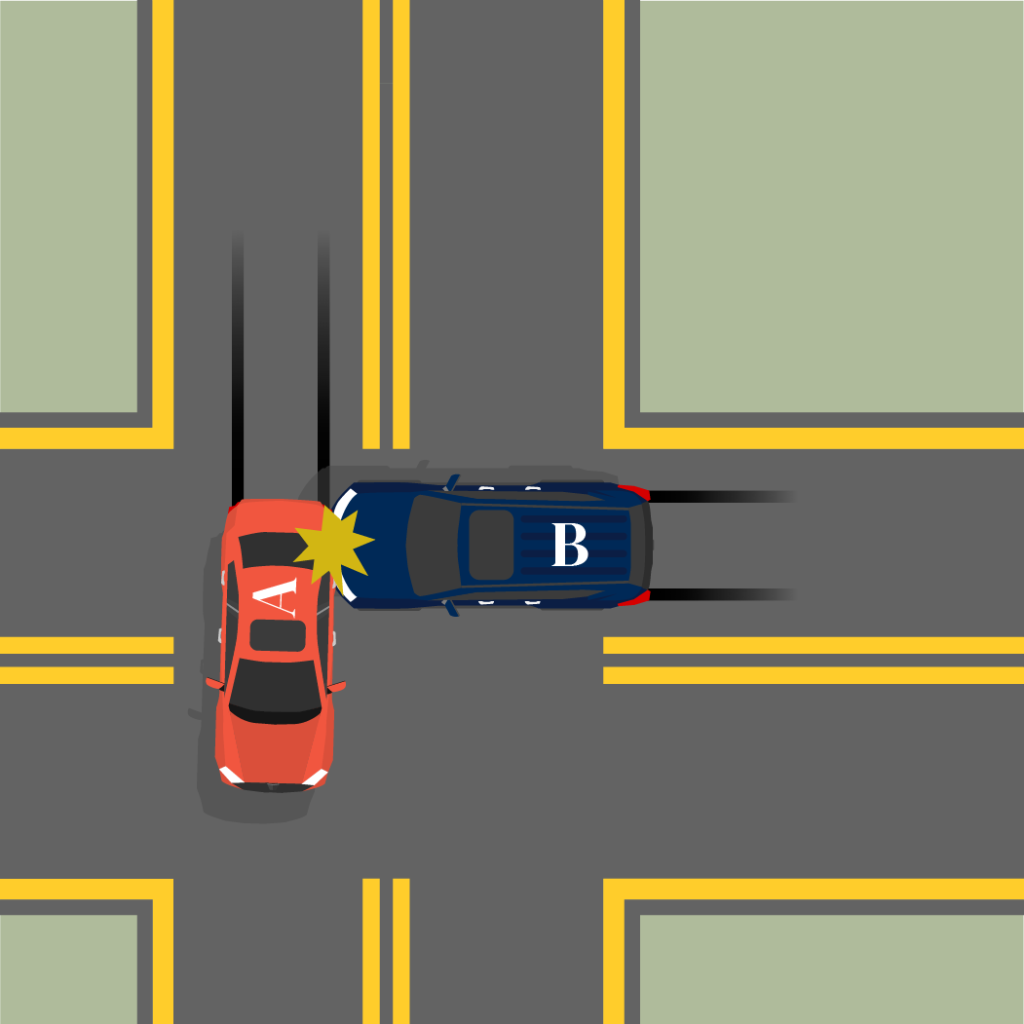
If vehicle A enters the uncontrolled intersection before vehicle B, the driver of vehicle A is not at fault for the accident, and the driver of vehicle B is 100% at fault for the accident.
Scenario 2
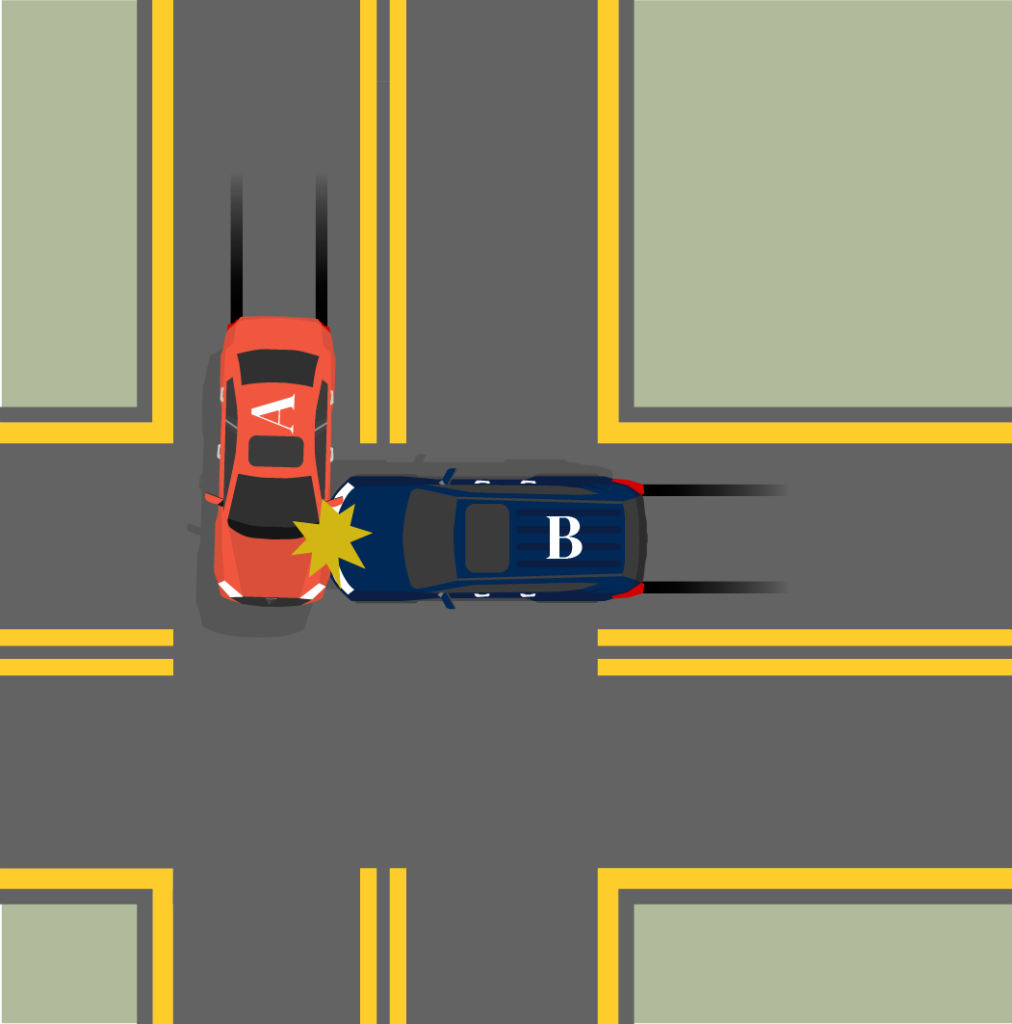
If both vehicles A and B enter the intersection simultaneously, and vehicle A is on the right of vehicle B in the intersection, the driver of vehicle A is not at fault for the accident. The driver of vehicle B is 100% at fault for the accident.
Scenario 3
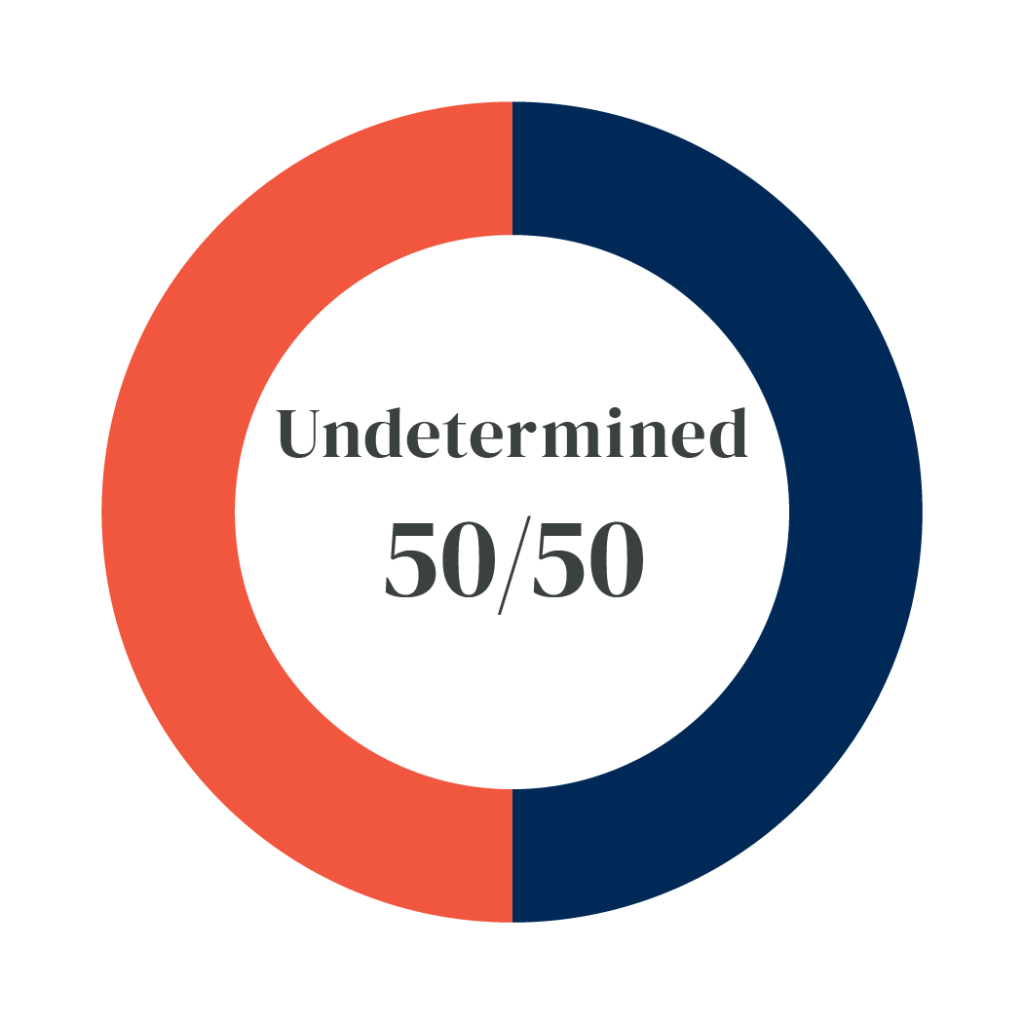
If it cannot be determined whether vehicle A or B entered the intersection first, the driver of each vehicle is 50% at fault for the accident.
Intersections with traffic signs
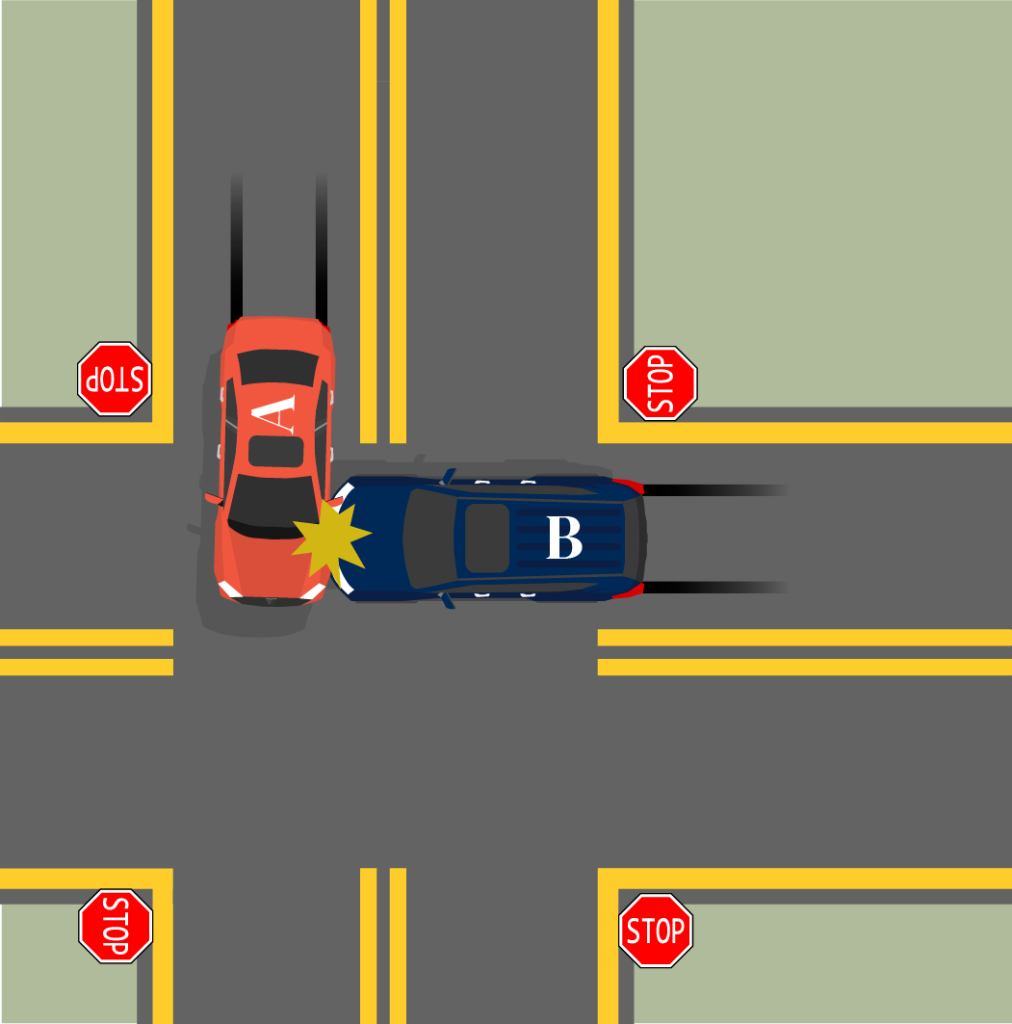
These accidents occur when vehicles A and B collide at a controlled intersection (one with traffic signs or traffic control signs).
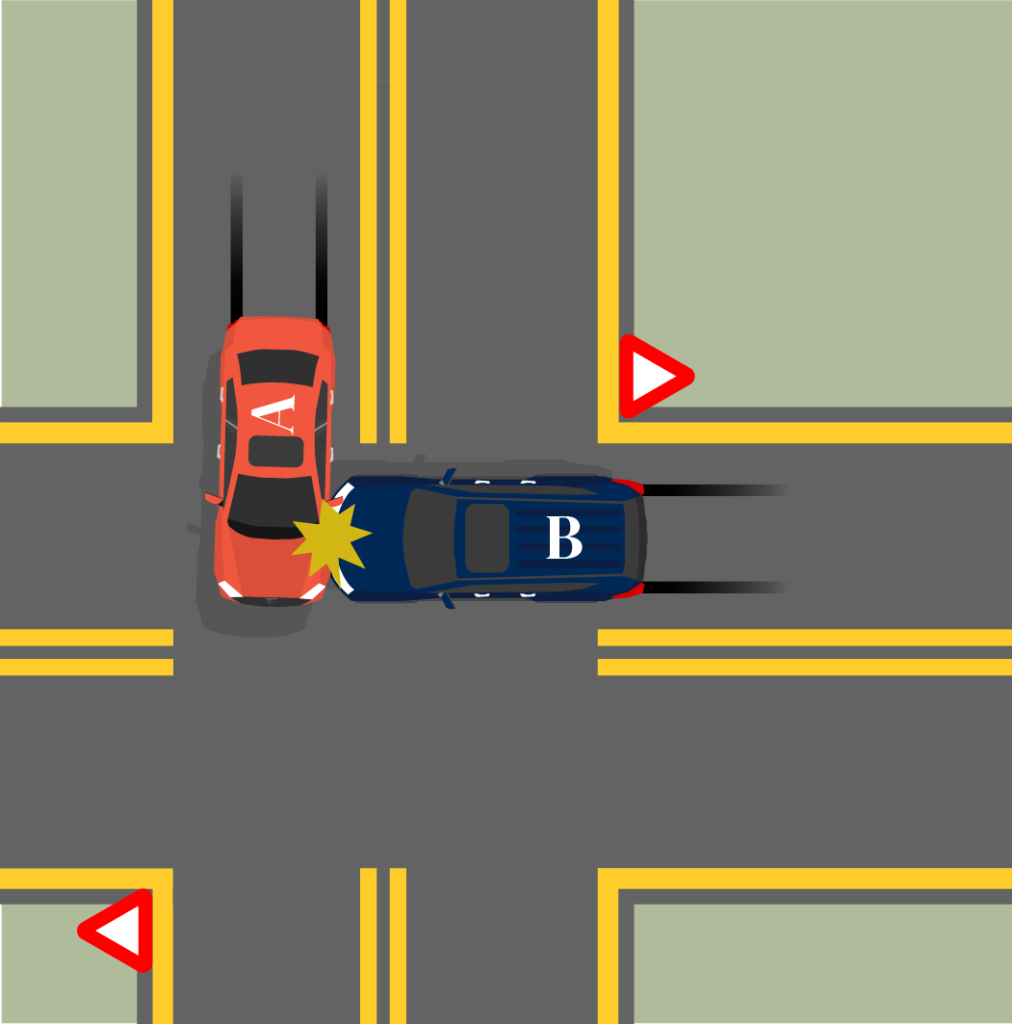
Scenario 1
If the driver of vehicle B fails to obey a traffic sign, the driver of vehicle A is not at fault for the accident, and the driver of vehicle B is 100% at fault for the accident.
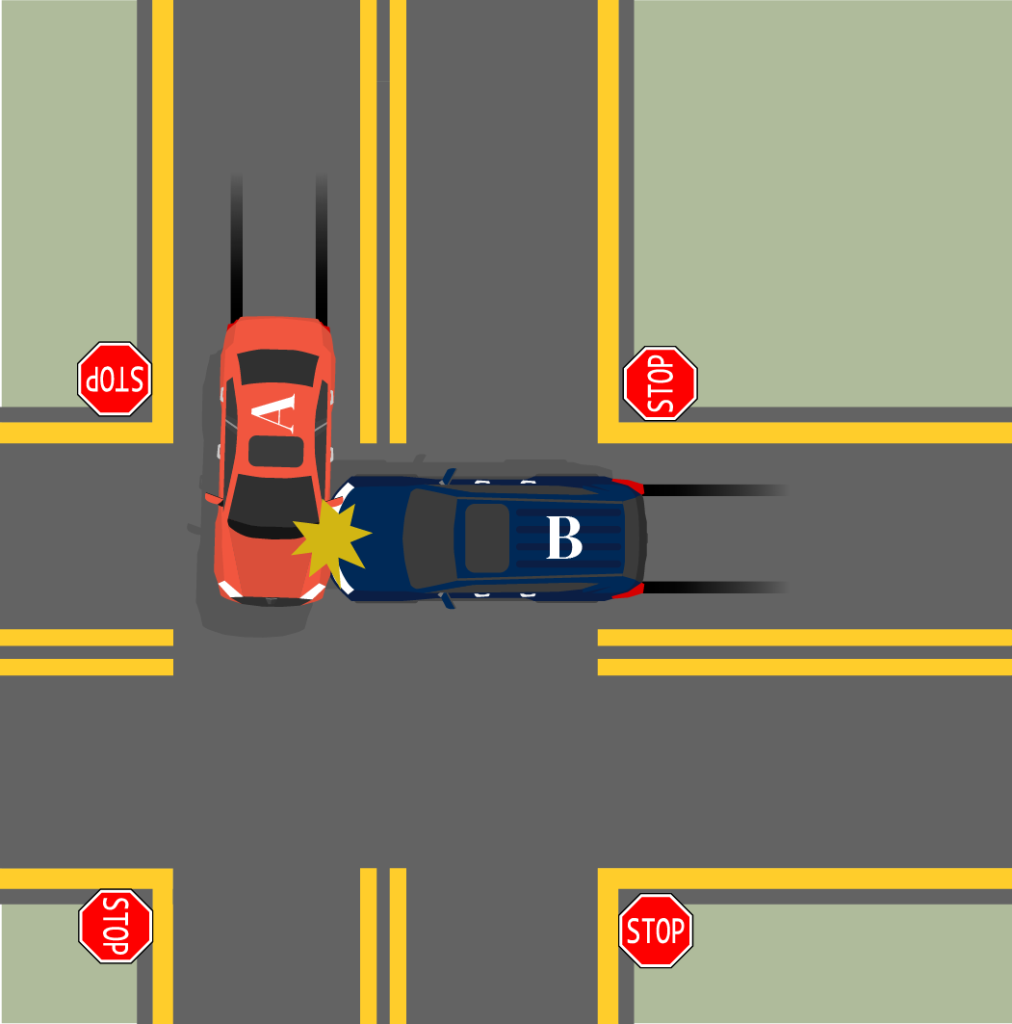
Scenario 2
If the drivers of vehicles A and B both fail to obey a stop sign, the driver of each vehicle is 50% at fault for the accident.
Scenario 3
If it cannot be determined whether the drivers of vehicle A, B, or both, failed to obey a stop sign when the accident occurred, the driver of each vehicle is 50% at fault for the accident.
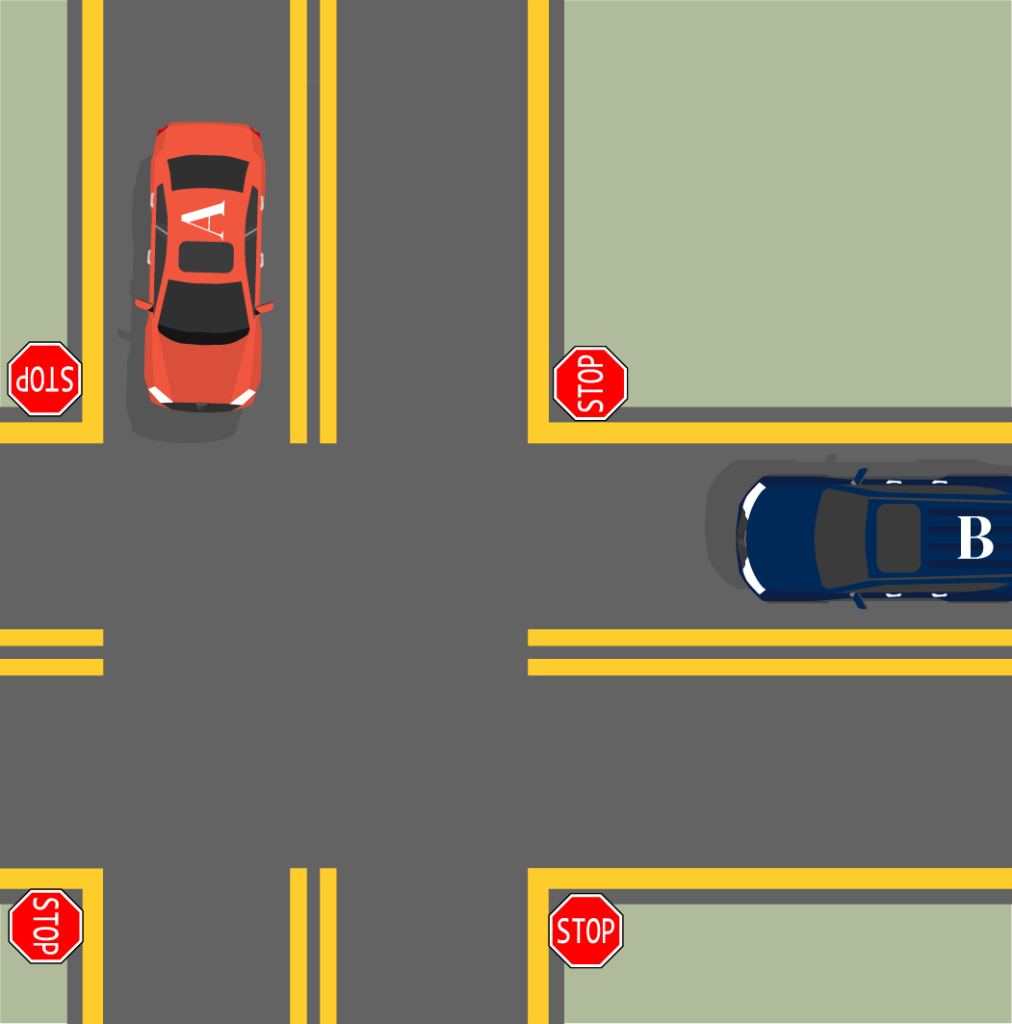
Scenario 4
If vehicle A stops first at an all-way stop intersection, the driver of vehicle A is not at fault for the accident, and the driver of vehicle B is 100% at fault for the accident.
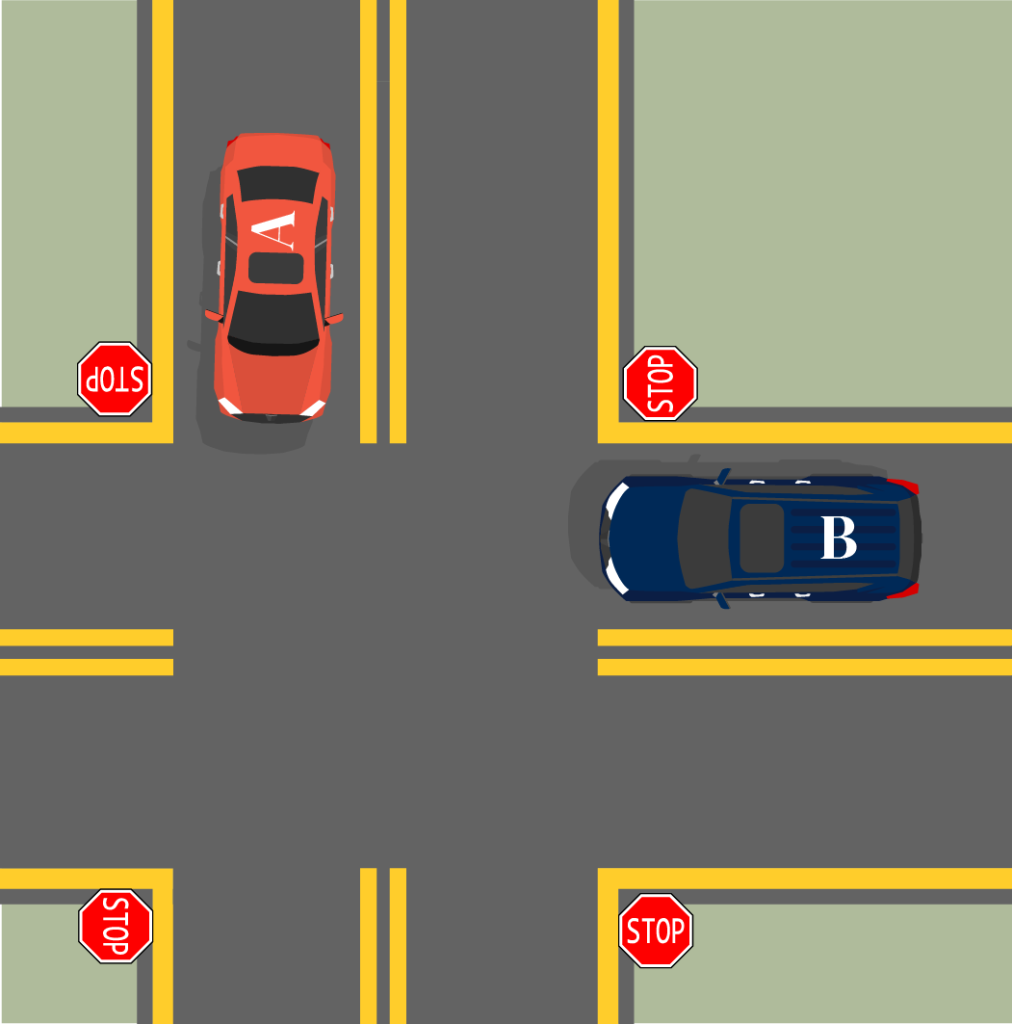
Scenario 5
If both vehicles A and B arrive simultaneously at an intersection with an all-way stop sign, and vehicle A is stopped to the right of vehicle B, the driver of vehicle A is not at fault for the accident, and the driver of vehicle B is 100% at fault for the accident.
Scenario 6
If it cannot be determined whether vehicle A or B arrived first at an intersection with an all-way stop sign, the driver of each vehicle is 50% at fault for the accident.
Intersections with traffic control signals
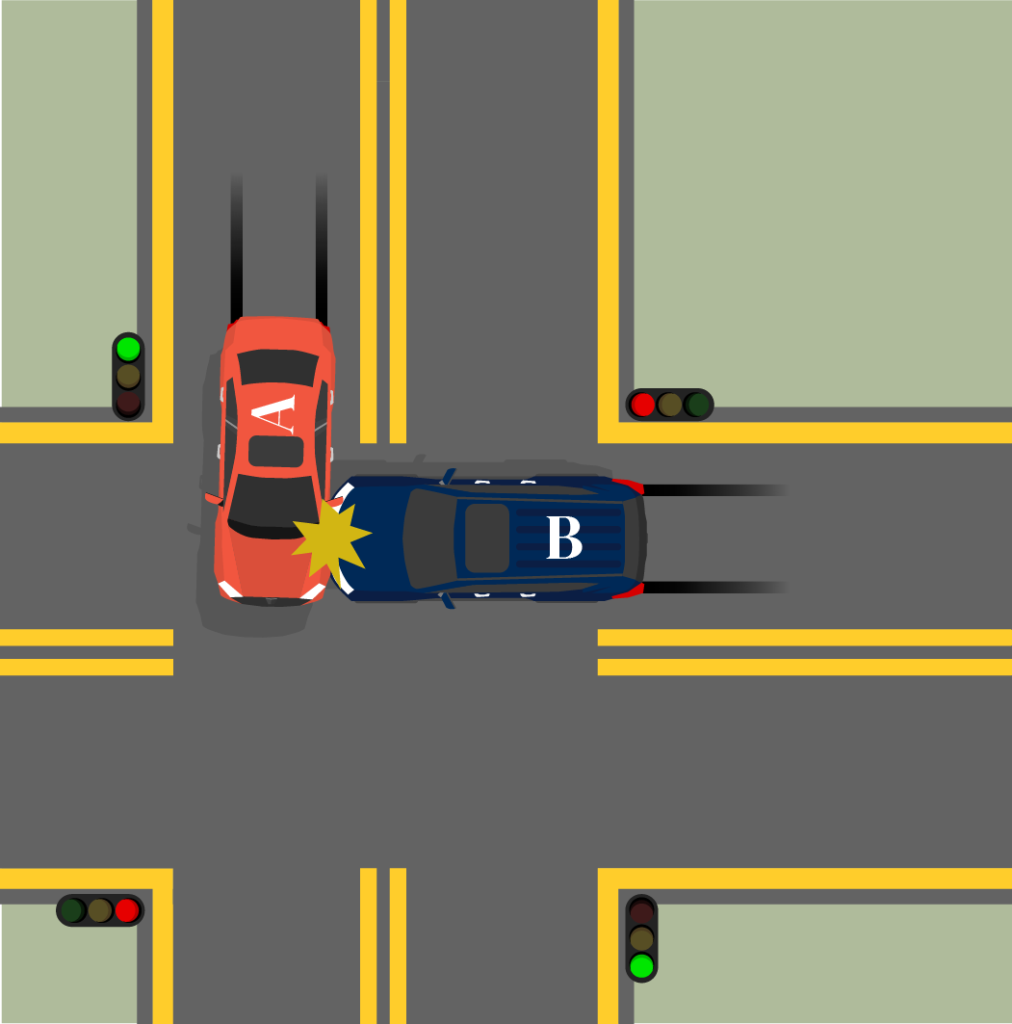
These accidents occur when vehicles A and B collide in an intersection with traffic control signals.
Scenario 1
If the driver of vehicle B fails to obey a traffic control signal, the driver of vehicle A is not at fault for the accident, and the driver of vehicle B is 100% at fault for the accident.
Scenario 2
If it cannot be determined whether the driver of vehicle A or B failed to obey a traffic control signal when the accident occurred, the driver of each vehicle is 50% at fault for the accident.
Scenario 3
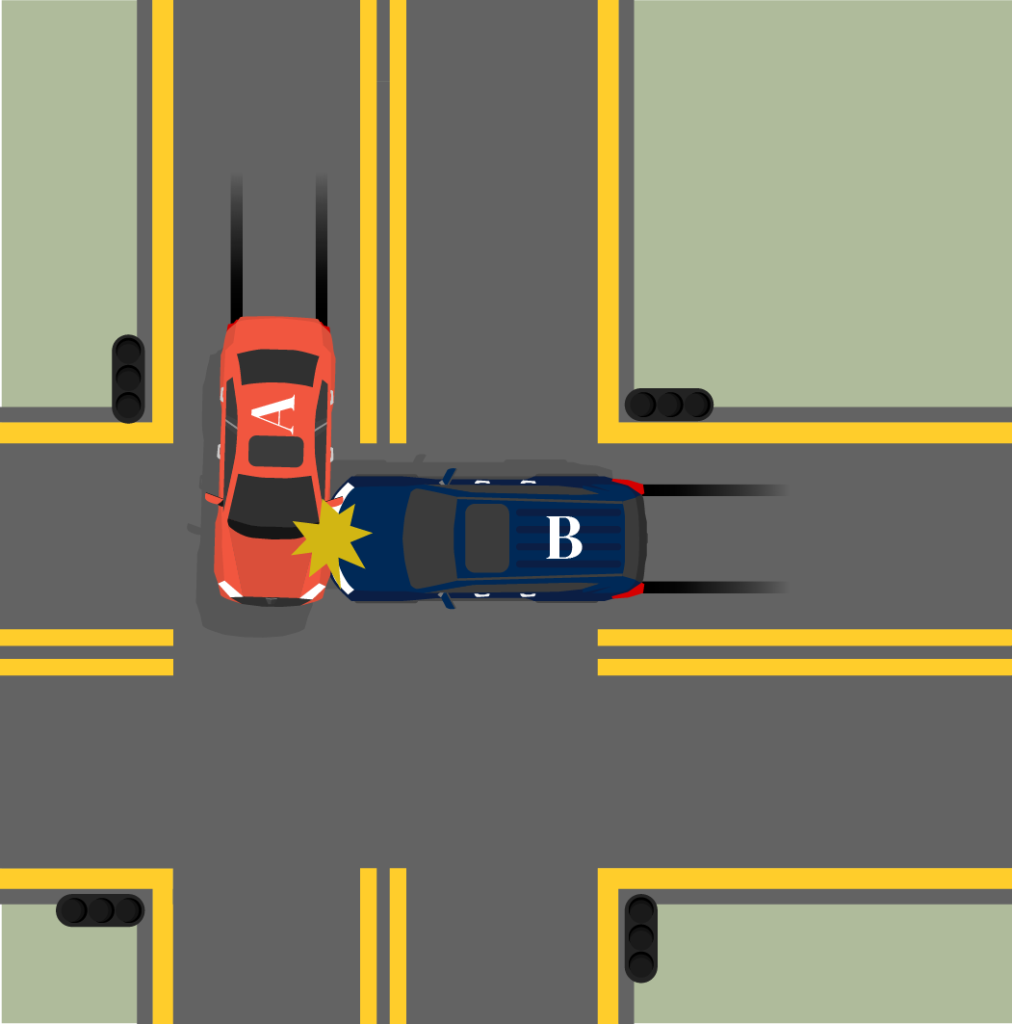
If the traffic control signals at an intersection are inoperative or malfunctioning, the degree to which each driver is at fault for the accident must be determined as if the intersection were an intersection with an all-way stop sign.
Parking lots
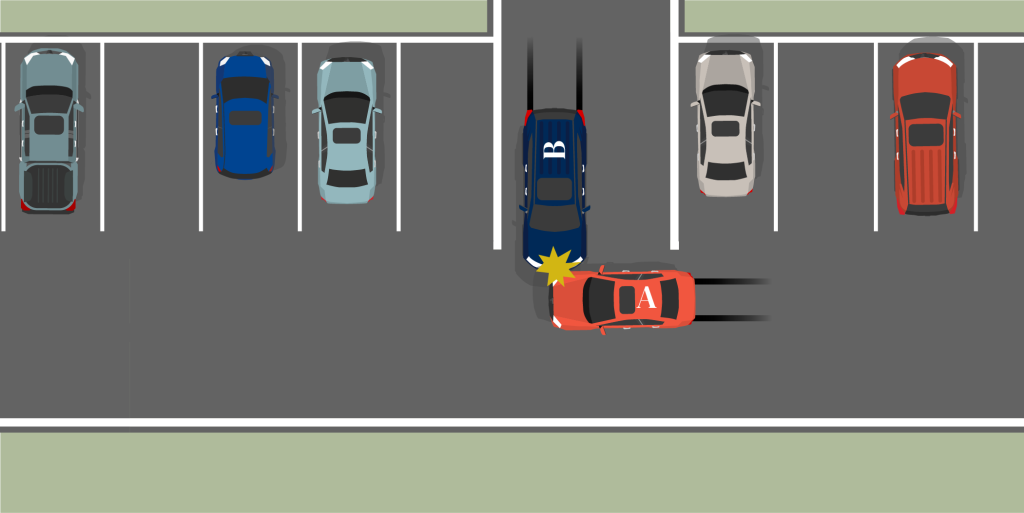
The fault for an accident occurring on a thoroughfare, like a parking lot, must be determined as if the thoroughfare were a highway.
Scenario 1
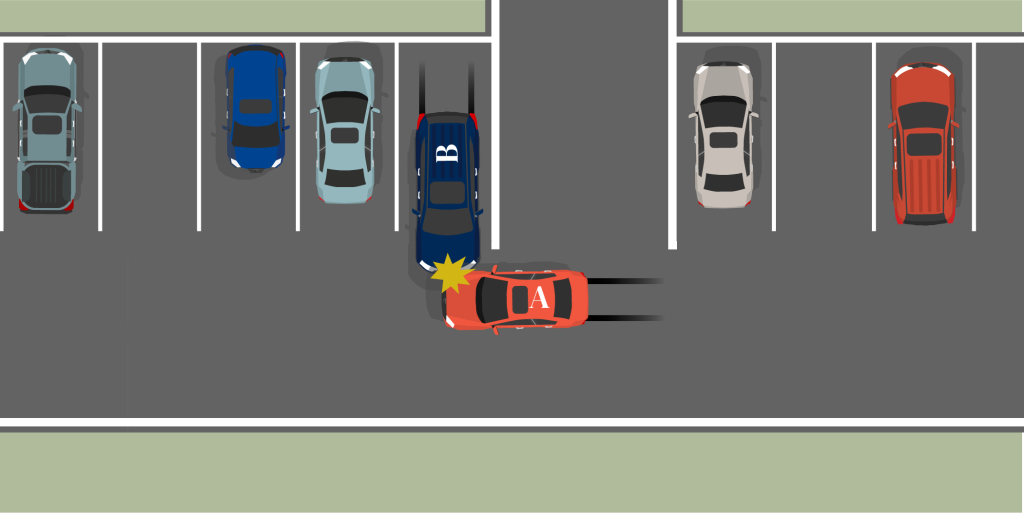
If the accident occurs when vehicle A is travelling on a thoroughfare, and vehicle B enters the thoroughfare from a feeder lane and fails to yield the right of way to vehicle A, the driver of vehicle A is not at fault for the accident. The driver of vehicle B is 100% at fault for the accident.
Scenario 2
If the accident occurs when vehicle A is travelling on a thoroughfare or feeder lane, and vehicle B is entering the thoroughfare or feeder lane from a parking space and fails to yield the right of way to vehicle A, the driver of vehicle A is not at fault for the accident. The driver of vehicle B is 100% at fault for the accident.
Scenario 3
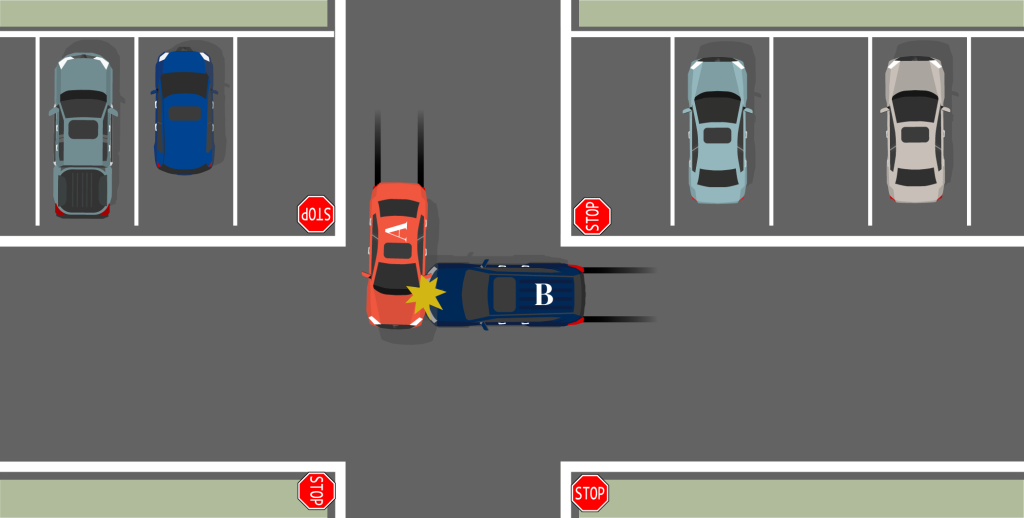
If the accident occurs in an intersection in a parking lot with a traffic sign, the degree to which each driver is at fault must be determined following the section on intersections with traffic control signals.
Scenario 4
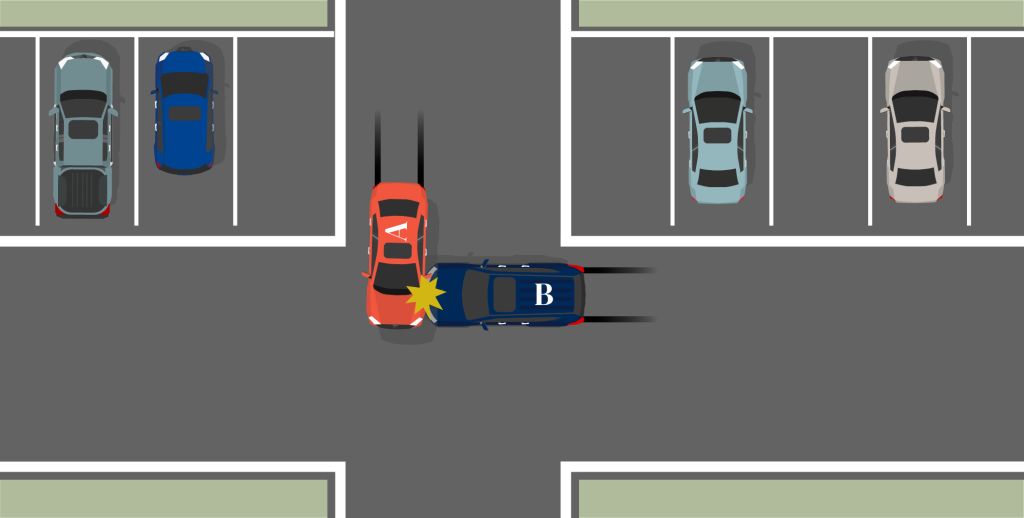
If the accident occurs in an intersection in a parking lot without a traffic sign, the degree to which each driver is at fault must be determined following the section on intersections without traffic signs if it cannot be determined whether the roads are thoroughfares or feeder lanes.
Parked vehicles
Scenario 1
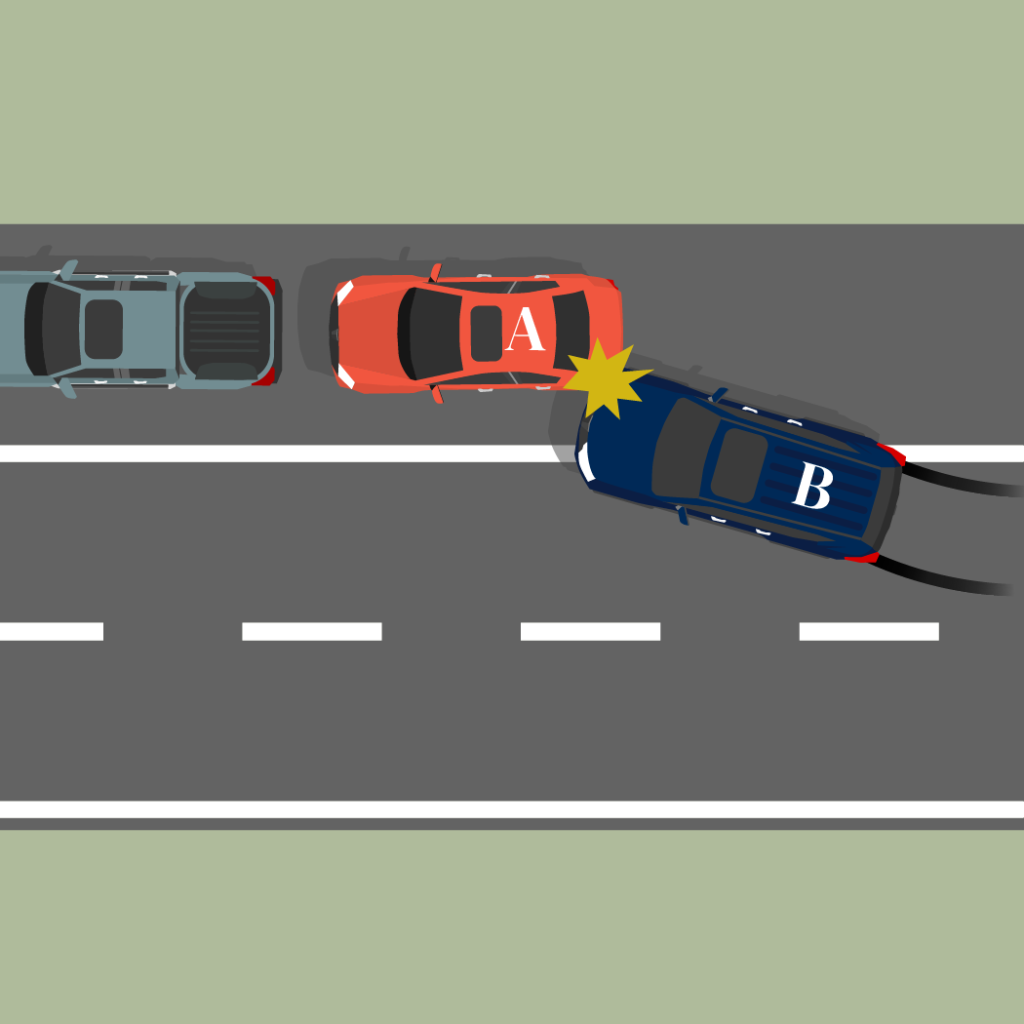
If vehicle B collides with vehicle A while vehicle A is parked, the driver of vehicle A is not at fault for the accident. The driver of vehicle B is 100% at fault for the accident.
Scenario 2
If vehicle A is illegally parked, stopped, or standing when the accident occurs, and the accident occurs outside of an urban area, the driver of vehicle A is 100% at fault for the accident. The driver of vehicle B is not at fault for the accident.
Note: If the striking/moving vehicle is uninsured or unknown (hit and run), DCPD does not apply, and the parked vehicle can claim through their own all-perils or comprehensive coverage if they have purchased the coverage.
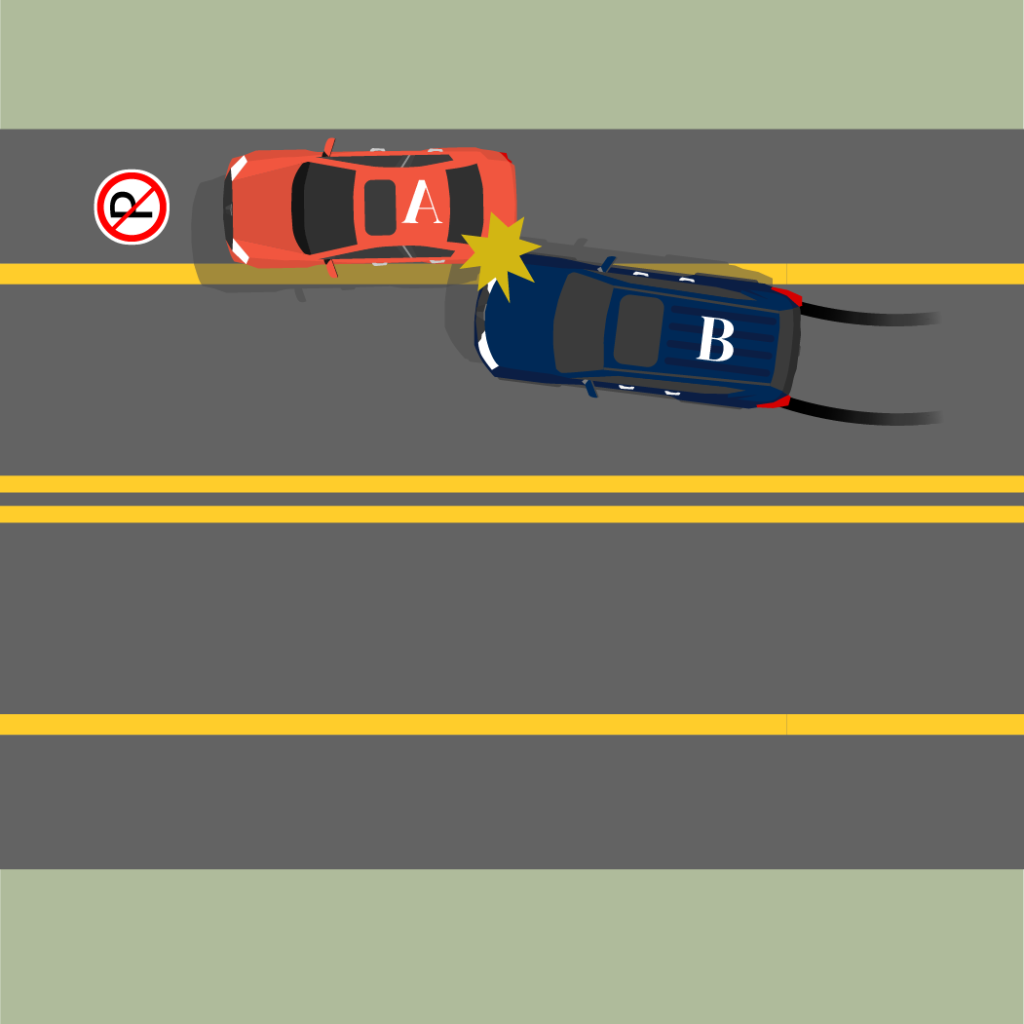
Driver fails to obey a sign or direction
If vehicles A and B collide when the driver of vehicle B fails to obey a direction given by a peace officer or a sign prohibiting entry, overtaking, passing, or turning, the driver of vehicle A is not at fault for the accident. The driver of vehicle B is 100% at fault for the accident.
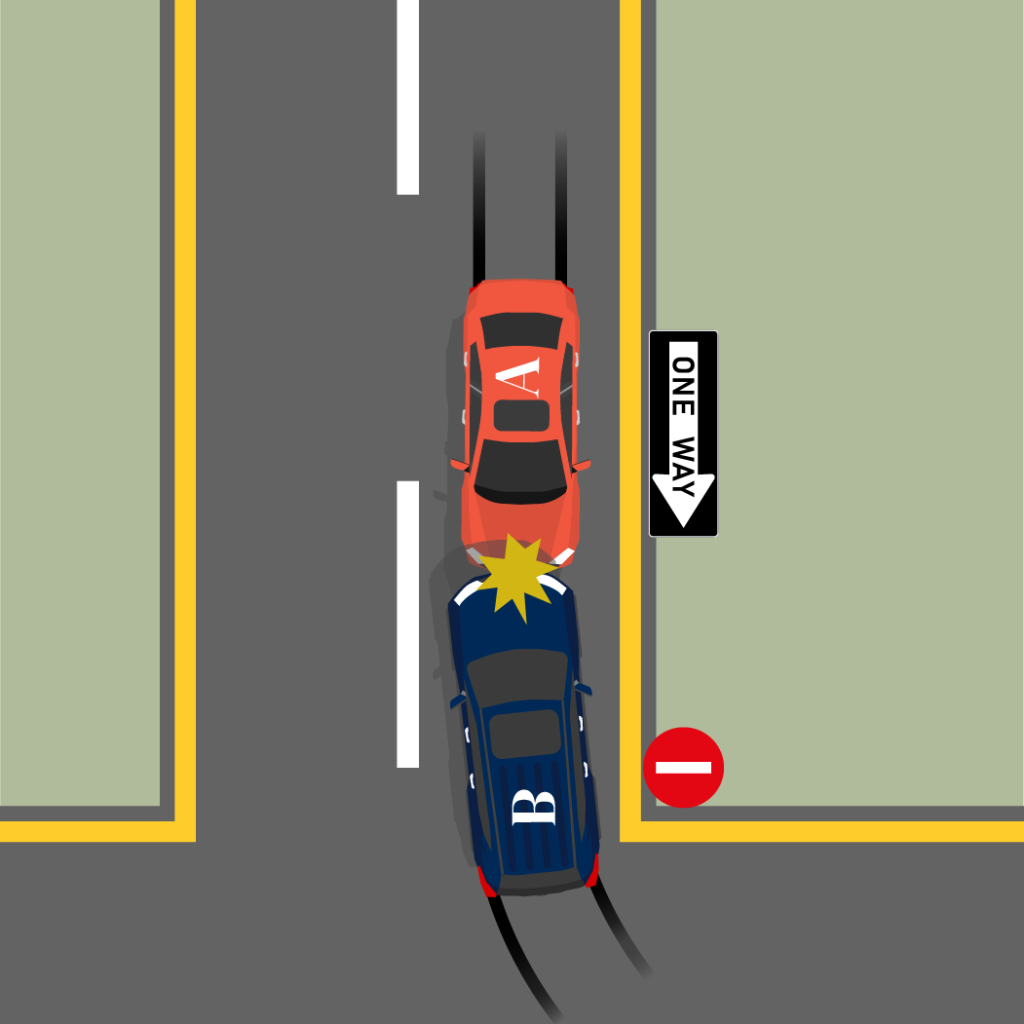
Backing up or making u-turns
If vehicles A and B collide while vehicle B is backing up or making a U-turn, the driver of vehicle A is not at fault for the accident. The driver of vehicle B is 100% at fault for the accident.
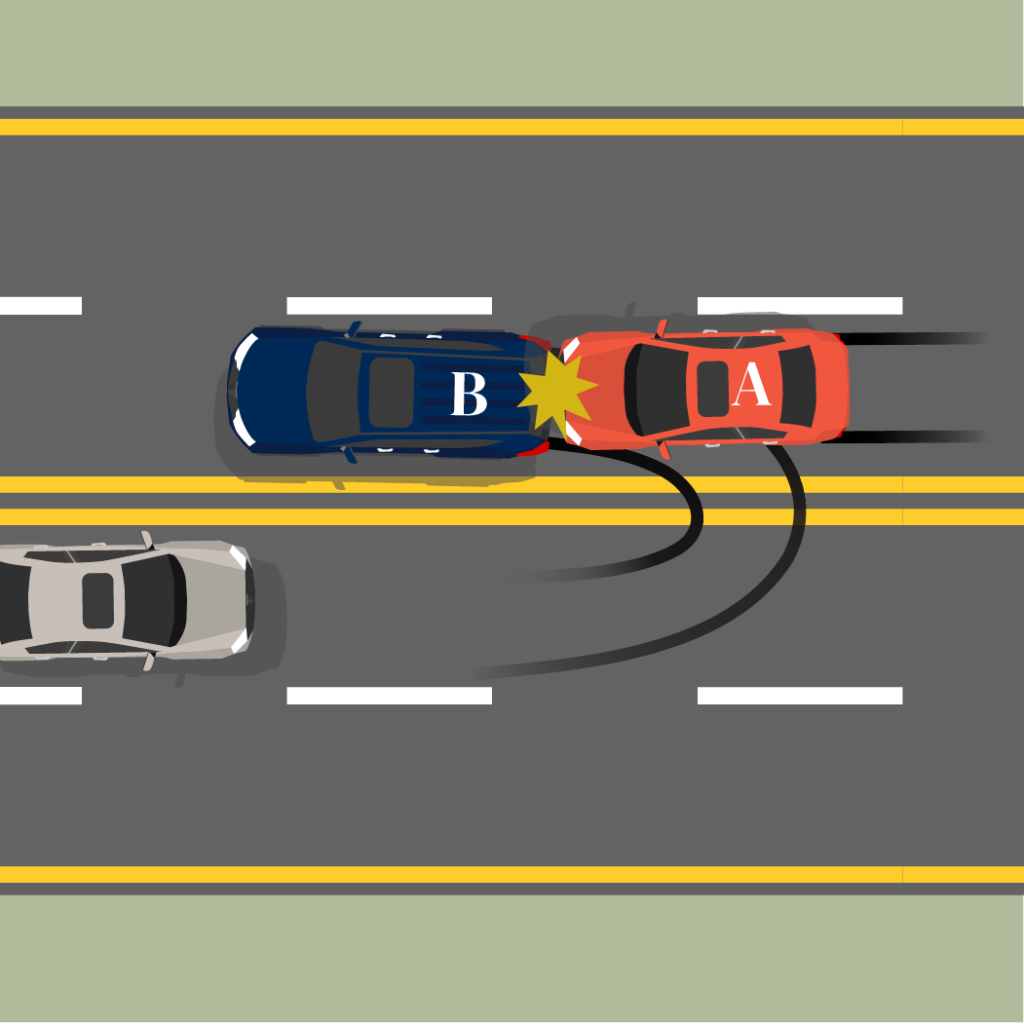
Open doors
Scenario 1
If vehicle A collides with vehicle B when the driver or passenger in vehicle B opens the vehicle door or leaves the vehicle door open, the driver of vehicle A is not at fault for the accident. The driver of vehicle B is 100% at fault for the accident.
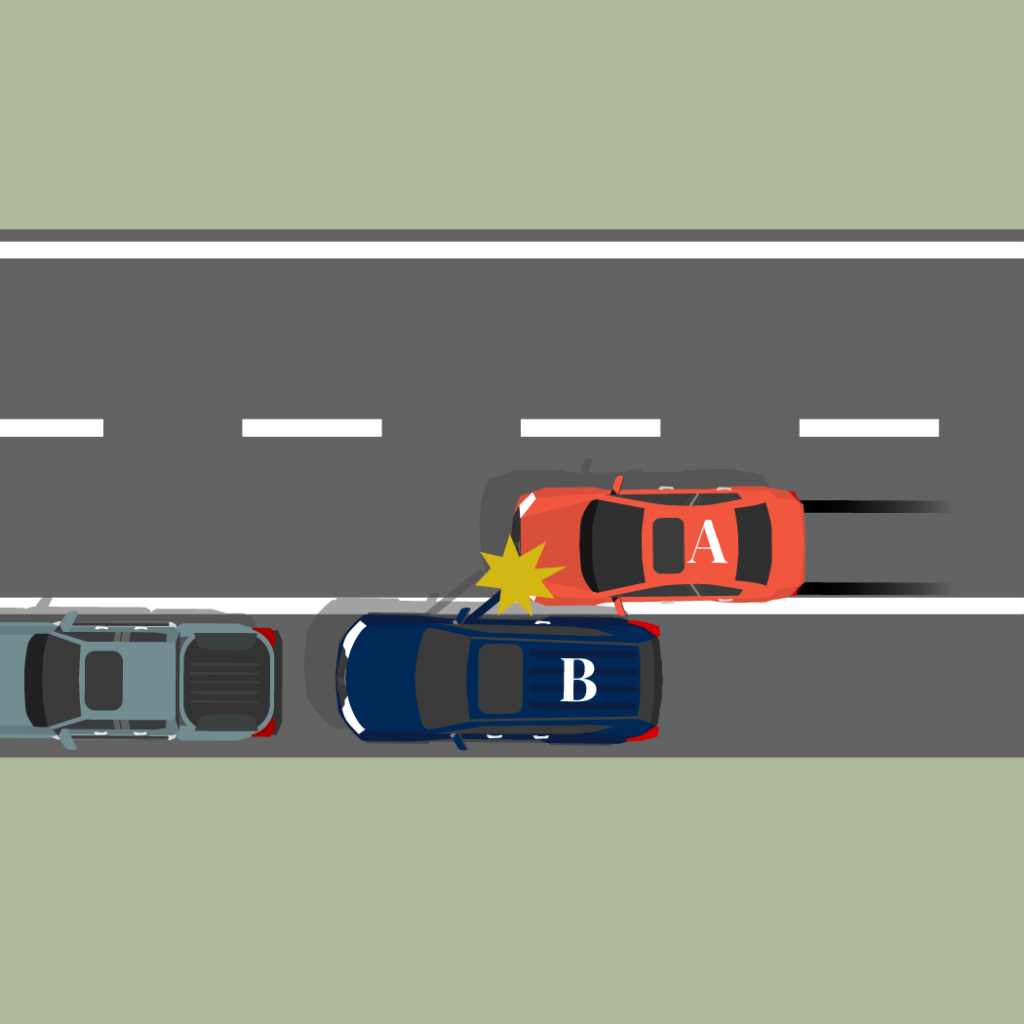
Scenario 2
If vehicle A collides with vehicle B when the driver or passenger in vehicle B opens the vehicle door or leaves the vehicle door open in a manner which is reasonably safe and does not constitute a hazard to moving traffic, the driver of vehicle A is 100% at fault for the accident. The driver of vehicle B is not at fault for the accident.